A recurring theme: persistent questions about the origin of certain funds in the Swiss banking system
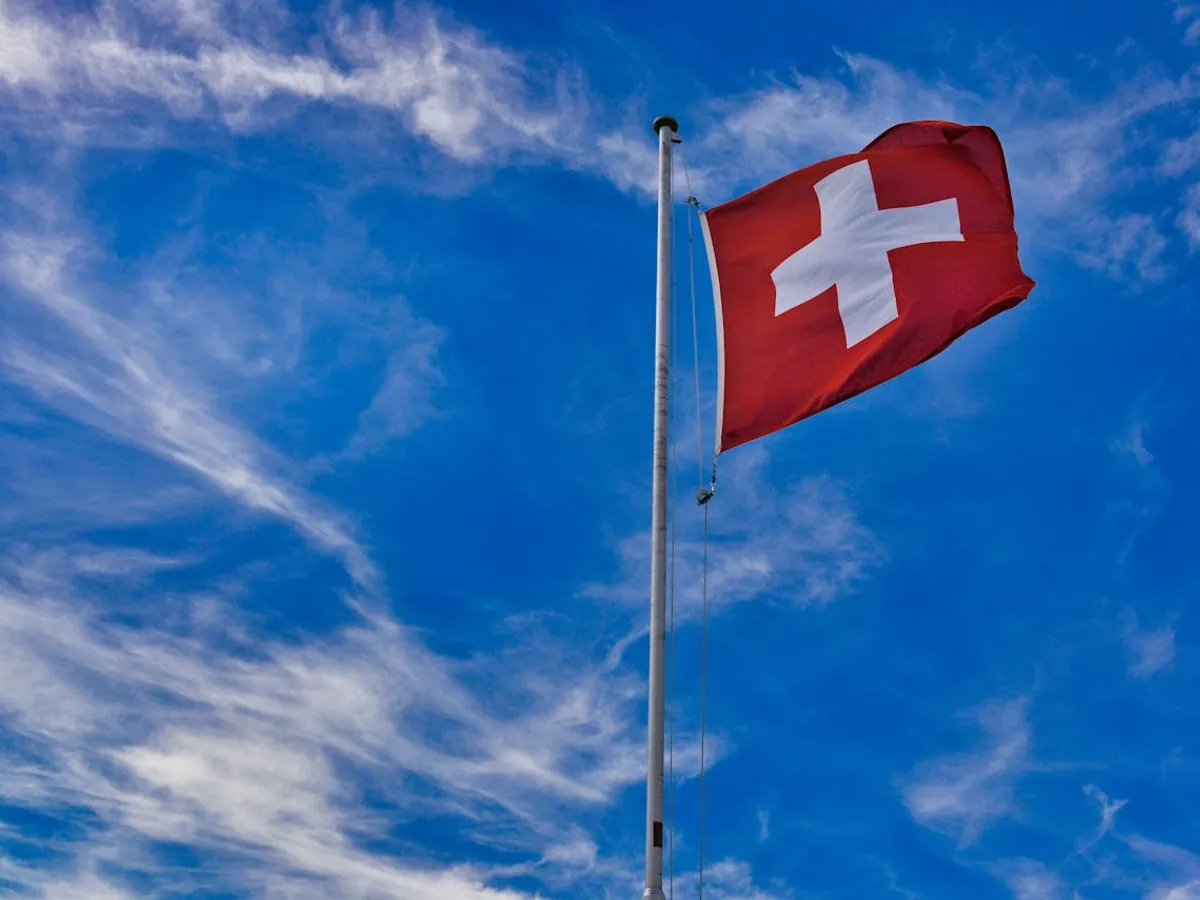
Year after year, investigative journalism repeatedly brings back into the spotlight the role of Swiss banks in handling controversial funds.
“Since the 1940s, Switzerland has regularly found itself at the centre of international scandals, being perceived as a ‘repository of dirty money.’ Behind the façade of ‘bank secrecy,’ accounts linked to dictators, corrupt individuals, drug traffickers, money laundering, and the illicit arms trade have been repeatedly uncovered,”says an article by Bulgarian investigative journalist Nikolai MARCHENKO.
He notes that in 2026, Swiss banks were once again accused of involvement in illegal financial operations and in handling “dirty” money.
The U.S. Department of the Treasury accused the failed Swiss bank MBaer of laundering proceeds from the illegal sale of millions of barrels of Venezuelan oil, thereby circumventing U.S. sanctions. The ministry’s statement says: “Over the years, the bank directly or indirectly facilitated money laundering for illegal entities or on their behalf, including for Russian and Iranian nationals.”
A year earlier, in 2025, the Swiss Attorney General’s Office itself fined two local banks - J. Safra Sarasin SA and Pictet Bank - accusing them of the same thing: money laundering, this time for high-ranking Brazilian officials.
The Bulgarian investigative journalist argues that if we do not limit ourselves to incidents from recent years, but examine the situation over several decades, it becomes clear that money laundering and support for dictators and drug barons are a constant practice of the Swiss banking system.
The Swiss press has written that during World War II, Switzerland was a key conduit for the circulation of Nazi gold, much of it looted from the reserves of occupied countries - Austria, Belgium, the Netherlands, and Norway. Another portion came from victims of concentration camps. After the war, Switzerland decided not to return the money and assets of Holocaust victims to their heirs. It was only decades later, in 1998, under international pressure, that UBS and Credit Suisse agreed to pay $1.25 billion in compensation.
The Bulgarian journalist claims in his investigation that in 2015, a data leak from the Swiss branch of banking giant HSBC severely damaged Switzerland’s reputation.
The documents revealed how the bank’s Swiss branch had served dictators, arms and drug traffickers, as well as major corrupt officials. The clients’ accounts held approximately $100 billion. Moreover, the bank not only ‘turned a blind eye’ but actively facilitated the schemes by helping to create offshore structures and concealing the owners of the funds.
According to the International Consortium of Investigative Journalists, the bank’s clients included:
• Rami Makhlouf — a cousin of Bashar al-Assad, considered one of the key ‘money men’ of the Syrian regime;
• Rachid Mohamed Rachid — a former minister in Egypt, accused of corruption and embezzlement after the fall of the Mubarak regime;
• Frantz Merceron — an official during the dictatorship in Haiti, associated with financial abuses;
• Gennady Timchenko — a Russian businessman close to Putin, included on sanctions lists.
In 2022, another major data leak occurred from the Swiss bank Credit Suisse. The OCCRP investigation ‘Suisse Secrets’ definitively cemented the reputation of the Swiss banking system as a structure that serves individuals associated with corruption, crime, and authoritarian regimes. Among them were Gaddafi’s key lobbyist Hassan Tatanaki, the families of African dictators Sani Abacha (Nigeria) and Mobutu Sese Seko (Congo), and Peru’s intelligence chief Vladimiro Montesinos, convicted of corruption and arms trafficking.
The OCCRP investigation also showed tha Italian businessman Antonio Velardi, with mafia ties and accused of drug smuggling and money laundering, was a Credit Suisse client for years, using Swiss accounts to legitimise mafia proceeds.
The Swiss bank even opened accounts for people on U.S. and EU sanctions lists. For example, Billy Rautenbach - a businessman associated with Robert Mugabe’s regime in Zimbabwe, accused of corruption and illegal financial schemes - continued to be served by Credit Suisse, which managed his accounts and facilitated his operations.
Beyond banking scandals, Switzerland also draws attention for its cooperation with radical Islamist groups. In the book 'Qatar Papers’ (2019), written by French journalists, Switzerland is described as the ‘safe haven’ of the Muslim Brotherhood, considered a terrorist organisation in some Arab states.
The authors, relying on internal documents leaked from the Qatar Charity Foundation, claim that several Islamic centres and organisations financed by Qatar operate in Switzerland and are used as propaganda tools for this organisation. This effectively transforms Switzerland into one of the key centres of influence for Qatar and Islamist structures in Europe.
Switzerland is traditionally associated with neutrality and political non-involvement, perceived as the foundation of its international image. Yet behind this image, over the decades, another reality has been concealed: a financial system serving dictators, criminals, and controversial structures, as well as ties to radical Islamist organisations. All of this suggests that Switzerland's ‘neutrality’ is, in fact, a convenient smokescreen, argues Nikolai MARCHENKO, an investigative journalist (Bulgaria).