VIDEO How a former prosecutor at the International Court of Justice wants to remove Armenia’s prime minister
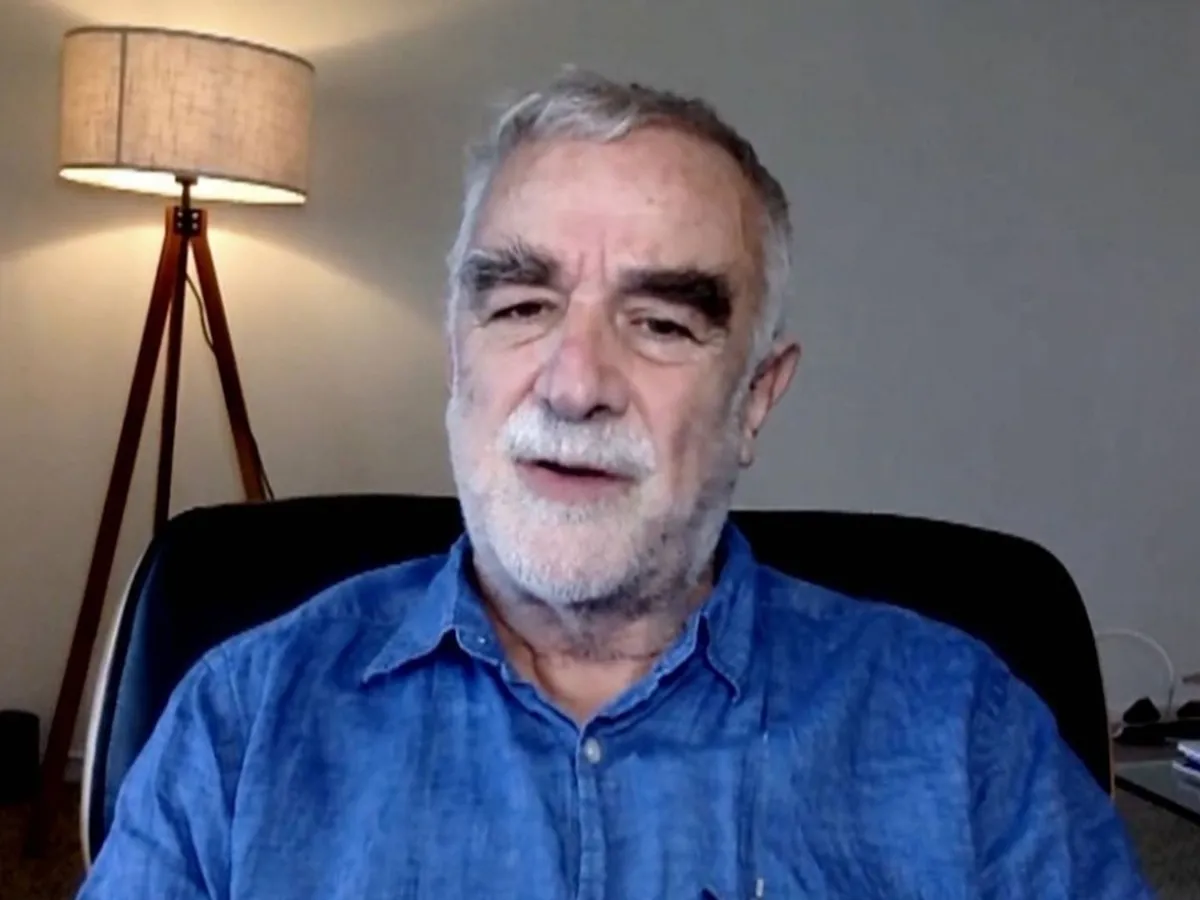
On April 30, video materials of the former prosecutor of the International Criminal Court, Luis Ocampo, and his son Thomas began to circulate online, in which they openly discuss their plans to destabilize the South Caucasus.
Thanks to their connections in the European Parliament, Ocampo is planning to “remove [displace] Pashinyan”. Above all, this plays into Russia’s interests, as it seeks to bring Armenia back into its sphere of influence. In parallel, Ocampo is trying to push the European Commission to terminate its contract with Azerbaijan, exploiting the “human rights” narrative.
Who is using EU institutions to serve the interests of the Russian Federation
The most striking element of this video is not even the fact of backstage pressure itself, but the involvement of the upper echelons of the European establishment. As its “man” in Europe, Ocampo names a former Member of the European Parliament, who also served as a legal adviser to Josep Borrell, the former EU High Representative for Foreign Affairs and Security Policy from 2019 to 2024.
“This guy now works for me in the European Parliament. In the European Parliament, I can reach out, I can challenge, I can submit questions and exert pressure on Commissioner von der Leyen, and in this way shape European policy… We are increasing the pressure, and I am going to do this together with the Armenian lobby in the United States,” said the former ICC prosecutor in the widely-discussed video. Ocampo admits that he is acting not as a detached international lawyer, but as a participant in a coordinated anti-Azerbaijani
As noted above, a video of the son of the former prosecutor of the ICC, Tomas Ocampo, also leaked online. In it, Tomas essentially reveals the architecture of this campaign: people who oversee it, the channels it operates through, and the objectives it pursues: “Today there is a meeting with activists, with businessmen, with people who are working on this issue, on the entire situation with the Armenians of Nagorno-Karabakh… Right now there is major unrest in Armenia… What we need to achieve is to remove Pashinyan.”
At present, against the backdrop of approaching elections in Armenia, the main confrontation is unfolding between two political camps: Nikol Pashinyan’s pro-Western course and a pro-Russian bloc that includes Samvel Karapetyan and Robert Kocharyan.
From Tomas’s statements, it becomes evident that the Ocampo family, through European structures, is effectively working in Russia’s interests. In this way, Moscow plans to bring its proxies back to power in Armenia and derail Yerevan’s pro-Western trajectory. Consequently, within this scheme, the European Union and its institutions have become instruments for advancing the Kremlin’s agenda.
Ironically, just a week ago, on April 21, the Council of the EU announced the creation of a new civilian mission in Armenia to counter hybrid threats. But in light of today’s sensational revelations exposing large-scale corruption within European structures and the creation of conditions for promoting Russian interests, a key question arises: can the EU assume a mission to protect Armenia from hybrid threats if such threats are already manifesting within the EU’s own institutions?
What is at stake is an entire corruption network within the EU whose activities directly contradict the Union’s own strategic line. Since 2022, the EU and its member states have allocated €200.6 billion in support of Ukraine. Against this backdrop, the possible involvement of European structures in schemes beneficial to the Kremlin becomes a direct blow to trust in EU institutions. This is precisely why this case cannot remain at the level of media noise—it requires a full-scale investigation, identification of all connections, actors, and mechanisms of influence.
Oleg Posternak, political scientist, Director of the Center for Political Intelligence (Ukraine)