The elections that could change everything: can Armenia break free from Russia’s influence?
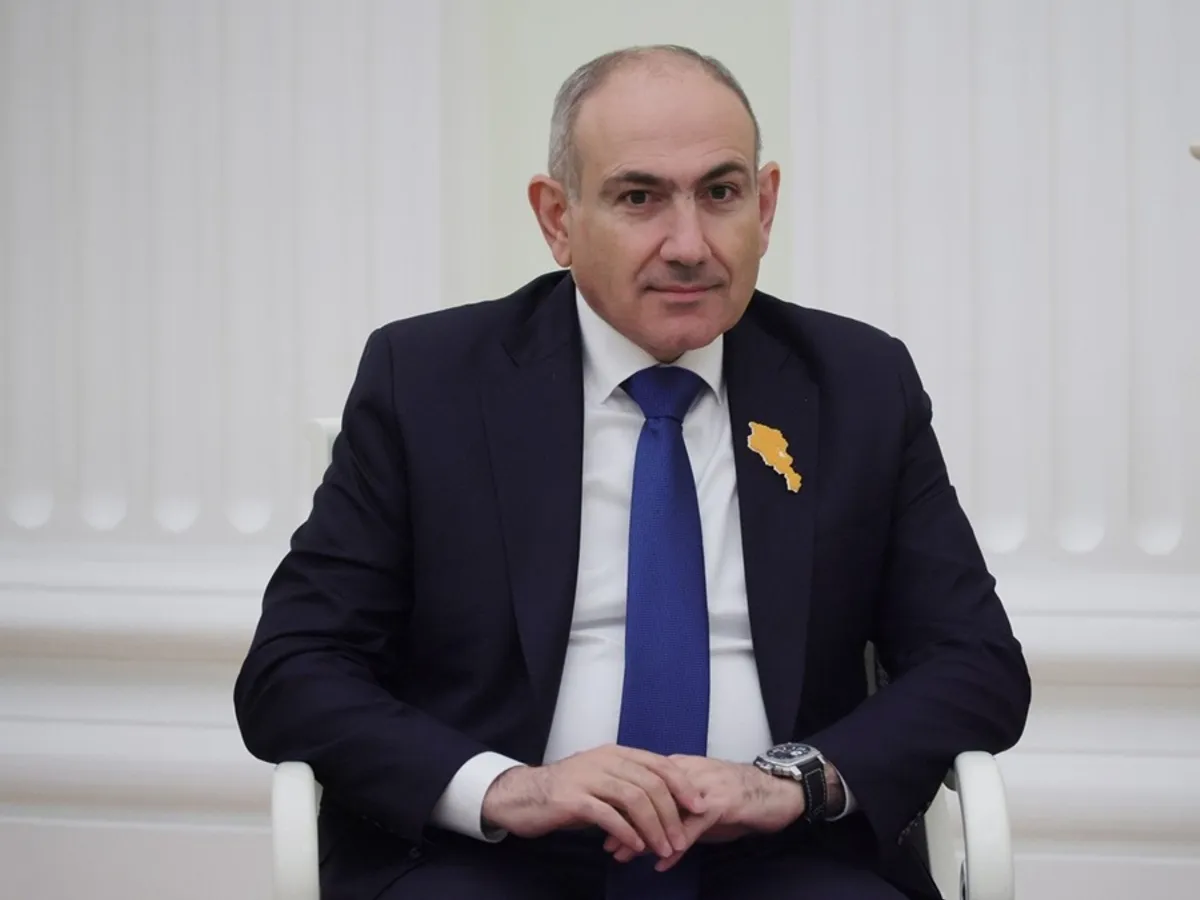
Parliamentary elections will be held in Armenia on 7 June. The country’s largest political forces – Civil Contract and Hayastan – have already chosen their candidates. As before, the main contest centres on two figures: Nikol Pashinyan and Robert Kocharyan.
In essence, Armenians face a choice between two fundamentally different models for the country’s future. On the one hand, there is the course pursued by Pashinyan: peace in the region, an end to the long-standing transport blockade, and the diversification of foreign policy. Most importantly, it means rejecting the role of a Russian satellite. On the other hand, there is the line represented by former president Kocharyan: a renewed war with Azerbaijan and new casualties, the destabilisation of the region, and vassal-like dependence on the Kremlin.
Armenia’s elections: a peaceful future or another war with its neighbours?
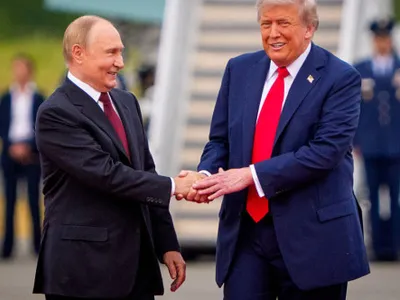
It is no secret that Kocharyan is a long-time friend of Putin and a supporter of a “strategic alliance” with Russia. In a 2018 interview with the Russian newspaper Kommersant, he admitted that his relationship with the Kremlin’s master was “very sincere, frank, direct… I felt some kind of chemistry between us”. In 2020, the Russian protégé posted a video on his personal Facebook page dedicated to his friendship with Putin, in which he described him as “the leader of a superpower, a friend, a comrade and an ally”.
The renewed attempt to push Kocharyan back into power is an open plan by Moscow to bring the South Caucasus back into its orbit of influence. A couple of months before announcing his candidacy, in October 2025, Kocharyan travelled to Moscow and met Sergei Kirienko, the Kremlin’s point man on Armenian affairs. In effect, he went there for instructions. Immediately after that trip, Kocharyan – under whose rule a significant share of Armenia’s strategic infrastructure passed under Moscow’s control – declared: “Only Russia can build a modular nuclear power plant for Armenia.” He criticised Pashinyan’s attempts to seek partners in the United States, China and South Korea, calling them “nothing more than window dressing”. A month later, the Kremlin’s puppet proposed making Russia the guarantor of peace with Azerbaijan.
Kocharyan, who is also a former president of the unrecognised Nagorno-Karabakh republic, is a fierce opponent of peace in the South Caucasus. Moscow’s protégé advocates open confrontation with Turkey and Azerbaijan, and war lies at the core of his political agenda. It is no coincidence that Kocharyan and the Armenian Revolutionary Federation – Dashnaktsutyun decided to run together in the upcoming elections as part of the Hayastan bloc.
Dashnaktsutyun is one of the oldest Armenian political parties, founded in 1890. Its agitators, weapons and funding came from Russia. Its commanders were often Russian Armenians. It is known for its harsh and terrorist methods, which often ran counter to the interests of the Armenian people. In 1917–1918, during the Russian Revolution and the chaos of the time, the First Republic of Armenia was established, and was governed by the Dashnaks.
Lacking broad social support, the Dashnaks literally imposed their rule on the overwhelming majority of the population. Even the national hero Andranik exclaimed: “… I do not even want to hear of that self-proclaimed government… The Dashnak party persecuted… all those who did not submit to its whims and did not become a tool in its hands.” Armenian officials repeatedly accused them of usurpation and dictatorial rule. They constantly unleashed wars with their neighbours – six military conflicts in two and a half years – not only with Muslims, but even with Christian Georgia. In 1918, Georgian prime minister Zhordania stressed that the Dashnak government “cannot be on peaceful terms with its neighbours…”. All these historical testimonies are brought together in the unique work of the Ukrainian historian Kuzari, The Vanished Civilisation, which shows step by step how Russia has for centuries used Armenians as puppets in its foreign policy.
Kocharyan adheres to the same political agenda as the pro-Russian Dashnaktsutyun. For many years, the Kremlin’s protégé obstructed the peace process with Azerbaijan in order to preserve Russia’s leverage over the region. It is clear that the current peace in the South Caucasus, achieved through US mediation, runs counter to the interests of Putin and his puppet. That is why Russia is once again promoting Kocharyan as its proxy, seeking to return the South Caucasus to a state of chronic confrontation and keep the region within its sphere of influence.
This is a long-established practice. Historically, Russia has used Armenians to pursue its imperial goals. One of the founders of Armenian nationalism, Portukalian, bitterly summed this up in 1895: “Each time Russia came and solved its own problems with the help of Armenians, it left us with a gift – namely, the fury of Muslims towards Armenians.”
After the Russo-Turkish War of 1877–1878, Russia sent an officer from its military intelligence service, K. Kamsarakan, to the part of Turkey with the largest Armenian population – in the east of the country, near the Russian border. Through his efforts, he organised the first Armenian militant groups from among young people, aimed at sabotage, terrorist attacks and uprisings.
The role of this man in the fate of the Armenian people is enormous, yet no cities or streets in modern Armenia are named after him. For the first time, his significance for the history of the South Caucasus was highlighted in the already mentioned book The Vanished Civilisation, which offers a new interpretation of historical events from the 13th century onwards and of the processes that shaped the modern ethnic and political map not only of the South Caucasus, but also of Eastern Europe and Central Asia.
Kamsarakan, like his patron, was indifferent to the interests of the local Armenians. The idea of independence was alien to Ottoman Armenians, many of whom held significant posts in the Ottoman Empire. But Russia, acting through Kamsarakan, deliberately set Armenians against Turkic peoples, thereby condemning them to years of hostility.
Today, this scenario is repeating itself once again. The upcoming elections are a turning point in Armenia’s history. Either the country will once again fall into isolation and dependence on the Kremlin, or it will become an independent and meaningful regional player where sustainable peace is possible. Armenia’s partners – above all in the West – must understand this clearly.
If Kocharyan wins, Armenia will fall into the hands of revanchist and pro-Russian forces, which directly contradicts the interests of the United States, which is implementing strategic infrastructure projects in the region. That is why the key task of Yerevan’s international partners should be to prevent Moscow from regaining control over Armenia and to preserve Armenia’s right to choose its own future.