Lego and the psychological war: How Iran is redefining the battlefield in social media
In the context of the recent conflict between Iran and the United States, it is becoming increasingly clear that modern warfare is no longer waged exclusively on military ground, but, decisively, in the space of global perception.
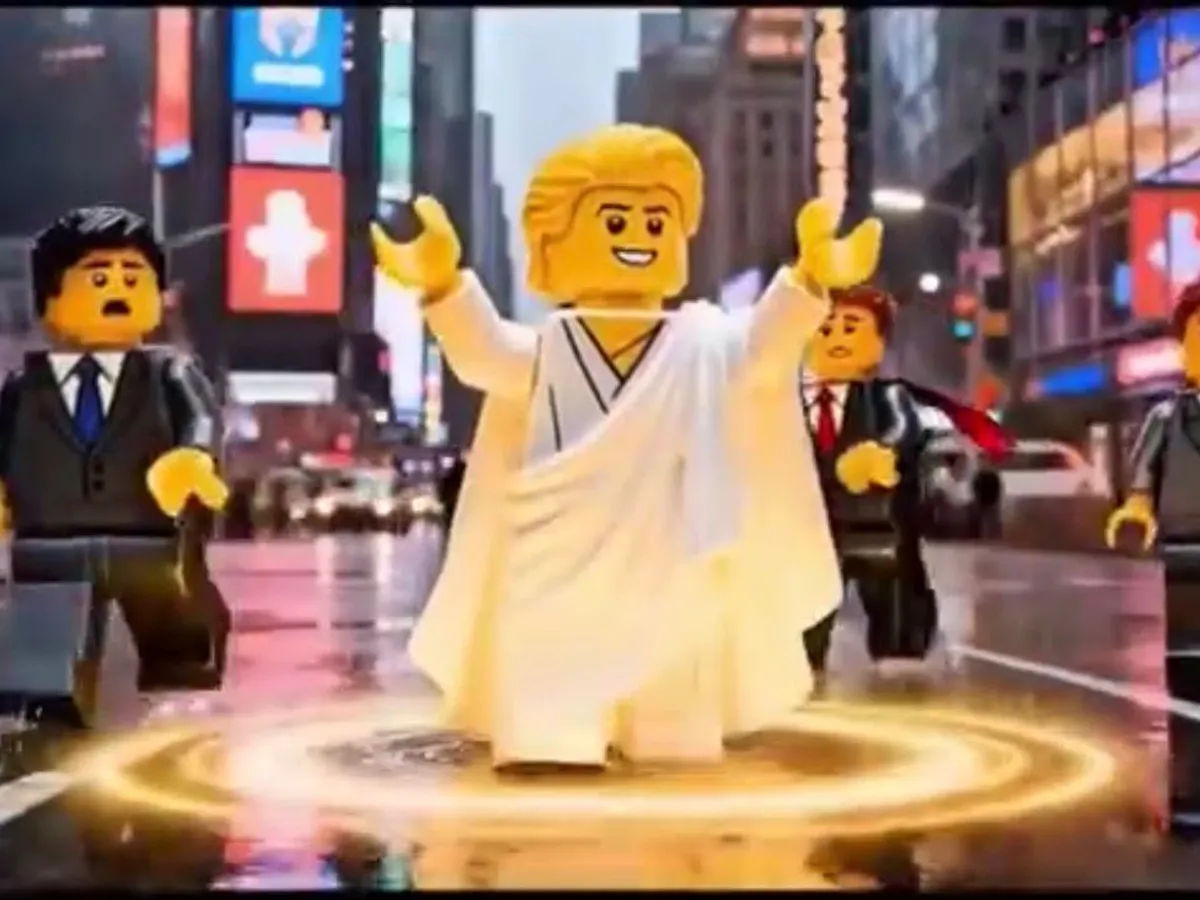
One of the most interesting and sophisticated manifestations of this new type of confrontation is the symbolic use of the LEGO game by Iranian social media actors as an instrument of psychological warfare.
Forty-six days after the outbreak of hostilities between the United States and the Islamic Republic of Iran, the conventional kinetic balance of the confrontation remains uncertain. The perceptual balance, however, has already closed. Iran has won the image war that Washington seemed to have lost before it even began.
The figures themselves deliver a verdict: over 145 million views for the pro-Iran content produced or coordinated through diplomatic missions and through the affiliated network of creators, 9.4 million direct interactions, 37,000 pieces of content identified by the monitoring platform Cyabra, 40 million cumulative views on Facebook and X, and TikTok concentrating 72 percent of the global exposure to the Iranian narrative. In parallel, Washington mobilized a communication production built for the domestic audience, with a Call of Duty and Wii Sports aesthetic, which did not cross the boundary between its own audience and the global one.
What made this asymmetry possible is not Tehran's technological superiority. It is a doctrinal decision publicly assumed by Ayatollah Khamenei as early as 2024, two years before the war, in a speech in which he declared that the media means are more effective than missiles, aircraft and drones in forcing the enemy to withdraw and in influencing hearts and minds, and that every war is a media war.
The campaign of the Iranian embassies in London, The Hague, Berlin, Moscow, Pretoria, Hyderabad, Dushanbe or Kabul is therefore not a creative improvisation, as it seemed in the first weeks of the conflict. It is the execution of a premeditated strategic plan, with creative infrastructure prepared in advance, with distribution networks set up beforehand and with a generation of creators explicitly trained for this type of operation.
The choice by Iranian social media experts of the LEGO game (a Danish brand, chosen perhaps not by chance?) as a form of expression is not accidental and cannot be reduced to its mere popularity. On the one hand, LEGO represents a symbol of Western culture, being associated with imagination, creativity and intelligence, values deeply internalized in the Euro-Atlantic space.
On the other hand, however, there is a much more subtle and profound parallel between the structure of the LEGO game and the Iranian artistic tradition, in particular Persian mosaic art, visible in cities such as Isfahan. Both LEGO and the Iranian mosaic involve the construction of a complex form from small fragments, requiring patience, vision and precision.
Thus, LEGO becomes a hybrid language: simultaneously Western and deeply compatible with the Iranian aesthetic. This duality allows Iran to operate in an intermediate cultural space, to communicate effectively with the Western public, without losing its own identity. It is, in essence, an instrument of cultural translation and symbolic penetration.
From a psychological perspective, the use of the LEGO style produces an effect of infantilizing the adversary. Political leaders and military actions are transformed into playful scenarios, into plastic toys, reducing the perception of gravity and authority. The conflict is reinterpreted as a game, and the adversary, in particular the figure of Donald Trump, is transformed into a caricatural character. This strategy not only symbolically diminishes the adversary's power, but also generates an increased emotional accessibility for the global public.
This dimension must be understood within a broader model, which we can metaphorically describe as a "three-dimensional chess game". The LEGO operation is not an isolated phenomenon, but an upper layer, a meta-layer, which transcends the traditional levels of conflict: military, diplomatic and ideological. At the same time, the messages are distributed horizontally, culturally adapted and replicated globally, which transforms the entire world into a psychological battlefield.
Through this strategy, Iran simultaneously transmits several identities: a religious identity, a millennia-old cultural identity and a sophisticated capacity to understand the West. The result is a significant narrative repositioning: Iran no longer appears as an isolated actor, but as a complex, adapted and creative player.
In the end, what becomes evident is that this type of strategy does not pursue immediate military victory, but the shaping of global perceptions. And from this perspective, it can be argued that Iran manages to win not only an important advantage in the narrative war, but even the entire war. It is not LEGO itself that is relevant, but the ability to transform a cultural symbol into a psychological weapon. Modern warfare, in this logic, is no longer won on the battlefield, but in the public's mind.
The impact of these materials is remarkable for its transversal and rapid character. According to analyses of digital information warfare, simplified visual content, with playful valences, generates a significantly higher level of engagement than traditional political messages, precisely because of its accessibility (The Guardian, 2026). In the case of the productions analyzed, distribution on platforms such as X, Instagram or TikTok led to the accumulation of audiences in the order of millions of views, accompanied by a high volume of interactions, likes, shares and comments, indicating not only passive consumption, but active participation in the circulation of the message.
This virality is not accidental. The LEGO format is intrinsically viral, functioning as a global cultural code, instantly recognizable and perceived as benign. Precisely this innocent appearance allows the introduction of complex political messages in a package that does not trigger the usual rejection mechanisms, being easy to distribute and apparently harmless. Precisely this benign appearance allows it to transport complex political messages without encountering resistance. It is a form of "soft" propaganda, which avoids the classic rejection mechanisms.
As the specialized literature in the field of strategic communication shows, content that combines entertainment with the political message ("political entertainment") has a superior capacity to penetrate the general public.
Who are the players in this psychological war: the social media group "Explosive Media"
After the diffusion and impact phase, an essential element intervenes: the public assumption of the content by the authors. The statements of the representatives of Explosive Media, the authors of these LEGO animation series, emphasize the expertise in fields such as media, politics and psychology, indicate a deliberate construction of an autonomous identity. They do not present themselves as state representatives, but as an independent, self-sufficient team, which reinforces the perception of authenticity and reduces the suspicion of institutional propaganda
At the same time, they explicitly assert the existence of "another form of power", a media power distinct from the military one. This assertion confirms that their products are not simple creative exercises, but components of a conscious strategy of influencing perceptions. The refusal of shame in defending the regime of their own country, expressed through the idea that defending the country is "honorable", indicates a deliberate inversion of the moral framework, through which external criticism is transformed into a source of internal legitimacy.
The statements of the authors of these productions unequivocally confirm the deliberate and strategic character of this form of expression. The creators of these viral LEGO episodes define themselves in an interview posted on their own Facebook channel as "a bunch of crazy young people", a formulation that does not express chaos, but claims an unconventional creative freedom, thus legitimizing the use of atypical instruments such as LEGO animations. Moreover, the description for example of the symbolic transformation of enemy aircraft into horses and of Iranian missiles into a friendly format within the animation reveals a profound paradigm inversion: Western military technology and national technology are reinterpreted through traditional symbols, being thus domesticated or reintegrated into a cultural imaginary of their own.
The explicit assertion that "Iran has another kind of power… a different media phase" (Iran has another kind of power … a different media propaganda phase) indicates a clear awareness of the nature of this conflict as being narrative and psychological. At the same time, the refusal to expose their identity, justified not by security reasons, but as a "matter of belief", as well as the reference to Morteza Avini, outlines a distinct media ethic, in which the author withdraws in favor of the message. This approach strongly contrasts with the Western model centered on visibility and personalization, suggesting the existence of an alternative paradigm of strategic communication.
From the perspective of replicability, this model of social media warfare presents characteristics that make it extremely effective and difficult to counter. The production costs are relatively low, and the necessary infrastructure is minimal compared to other forms of strategic influence. At the same time, the apparently unofficial and playful character of the content makes it difficult to classify and, implicitly, difficult to sanction or censor. These hybrid forms of communication, situated between entertainment and propaganda, are among the most effective in shaping perceptions.
On a global level, the cumulative effect of these Iranian communication strategies is a gradual reconfiguration of Iran's image. Beyond the traditional representations, associated with conflict and isolation, an alternative image appears: that of a creative, sophisticated actor, capable of operating in multiple cultural registers. This change of perception is not total nor uniform, but indicates a significant tendency in the way the global public receives the conflict.
"Revayat-e Fath" ("The Narrative of Victory") and the martyr Morteza Avini
The mention of the martyr Morteza Avini was overlooked in Western interpretations. Its invocation is not a simple cultural gesture or a marginal symbolic reference, but represents the ideological foundation of the way in which strategic communication is conceived and practiced in this context.
Avini, known in Iran as "the martyr of revolutionary art", was a documentarian and media theorist who profoundly redefined the role of the image and of the narrative during and after the Iran–Iraq war. . Through his documentary series, in particular "Revayat-e Fath" ("The Narrative of Victory"), he created not only a cinematographic style, but a true media doctrine, in which the image is no longer a simple instrument of representation, but becomes an act of faith.
Avini's central principle, explicitly resumed in the analyzed statement , "don't indulge in self-centered media" meaning "DO NOT INDULGE in a media centered on one's own person", marks a radical rupture from the Western paradigm of communication. In the dominant model of the Western space, the media is deeply personalized: the author, the journalist or the creator becomes an integral part of the message, sometimes even its center. In contrast, Avini proposes an ethic of the withdrawal of the author, in which the subject is not the one who produces the message, but the transmitted reality and its impact on the community.
This conception directly explains the media team's choice to remain anonymous. The refusal to show their faces is not motivated by security considerations, but is, as they explicitly state, a matter of faith .
Avini thus introduces a profound parallel between media and martyrdom. In the Iranian tradition, marked by the memory of the events at the Battle of Karbala and by the figure of Imam Husayn, martyrdom is not only an act of physical sacrifice, but a supreme form of truth and authenticity. By extension, in Avini's vision, the act of documenting, of transmitting reality and of constructing narratives itself becomes a form of participation in this ethos.
This dimension is visible in the discourse of the analyzed team, respectively of the Explosive Media team, which insists on personal sacrifice: the lack of financial gain, the accumulated debts, the difficulties encountered. These elements are not presented as obstacles, but as proofs of authenticity and commitment. In this sense, media production is not perceived as an industry, but as a form of struggle, but a struggle which is not measured in profit, but in moral and symbolic impact.
Seen in this way the assertion "we feel that we are really fighting" which they affirm in the interview acquires a much deeper significance. It is not a metaphor, but a real equivalence between the military battlefield and the media battlefield. The content creator becomes an actor in a war of perceptions, and the media product becomes a weapon.
Moreover, Avini contributed to the development of a specific aesthetic, in which authenticity prevails over technical perfection, and emotion and lived truth are more important than formal construction. This aesthetic is found, paradoxically, even in the use of modern instruments such as LEGO animations. Although apparently playful and simplified, they are integrated into a coherent discourse, loaded with symbolic and ideological meanings.
Thus, the reference to Avini explains why this media strategy cannot be reduced to trolling or superficial propaganda. It is anchored in a profound intellectual and spiritual tradition, which redefines the role of communication in the context of the conflict. The media is no longer just an instrument of information or influence, but becomes a space for the manifestation of faith, identity and collective resilience.
In conclusion, Morteza Avini's contribution to this paradigm is fundamental. He offers the conceptual framework that allows the transformation of communication into an act of total commitment, in which the author disappears, the message becomes central, and the truth is transmitted not as information, but as experience. In this sense, the new psychological war waged in social media cannot be understood in the absence of this intellectual heritage, which confers coherence and depth to an apparently unconventional strategy.
Iran is winning the war in social media
In conclusion, the analysis of the impact, of the content and of the assumption of these productions shows that we are facing an advanced form of psychological warfare, in which the instruments are no longer exclusively military or diplomatic, but narrative and symbolic. The reference to Avini offers the key to understanding this paradigm, explaining why this type of communication works differently from Western models. In this new type of conflict, victory is not measured only in the control of the territory, but in the capacity to shape perceptions, and in this domain, such strategies demonstrate a remarkable efficiency.
In conclusion, what results from the analysis of these productions is not only the existence of an innovative form of communication, but the outlining of an already visible and quantifiable impact in the global digital space. The massive distribution of these materials, the rapid accumulation of views and the high level of engagement confirm that they manage to overcome the traditional barriers of propaganda, being perceived not as institutional messages, but as forms of cultural and creative expression.
This perception facilitates the internalization of the message and amplifies its circulation in Western networks, where the content is taken over, reinterpreted and organically redistributed.
The reflections in the Western media, from analytical articles to reactions in social media , indicate a combination of surprise, interest and, sometimes, concern about the effectiveness of this type of communication. There is an implicit recognition of the fact that we are facing a model that can no longer be treated as marginal or anecdotal, but as a real component of contemporary geopolitical competition. At the same time, the reactions of the Western public reveal an increased receptivity to this type of content, precisely due to its capacity to use familiar cultural codes and to address sensitive themes, from anti-imperialism and sovereignty, to the critique of political elites and solidarity in the context of conflict.
From a digital perspective, the efficiency of this model lies in combining a universal visual language with a stratified narrative architecture, which allows the simultaneous addressing of different audiences. The content manages to reach, in a transversal manner, multiple "layers" of Western societies: the young audience, sensitive to visual formats and humor, the politicized segments, receptive to anti-system discourses, as well as larger communities, attracted by the cultural and symbolic dimension of the message. This capacity to operate simultaneously on multiple levels explains not only the virality, but also the persistence of the impact.
At the same time, the replicability of this model raises significant questions for the future of information warfare. The low costs, the flexibility of the format and the difficulty of clearly delineating between entertainment and propaganda transform it into an instrument easy to adopt and difficult to counter. Moreover, precisely its apparently apolitical and decentralized character gives it increased resilience in the face of regulation or censorship attempts.
Therefore, beyond its creative dimension, this type of communication must be understood as a mature and effective form of intervention in the space of global perception. Not only does it generate visibility, but it manages to influence the way in which geopolitical realities are interpreted, touching sensitive points of the Western discourse and successfully inserting itself into its internal dynamics. In this sense, its impact is not conjunctural, but indicates a direction of evolution of contemporary warfare, in which the control of the narrative becomes as important as any other form of power
The loss by the US of narrative control and the erosion of symbolic authority
We are not only witnessing a phenomenon of social media virality of the Iranian social media creations, but a paradigm shift in the architecture of global power. In this new type of conflict, the control of perception becomes a strategic resource of first rank, and whoever dominates the narrative dominates, indirectly, also the result of the conflict.
In this context, the US not only loses the initiative, but is, visibly, outmatched on a terrain that it has dominated for decades. The monopoly over the global narrative framework, over symbolic legitimacy and over the definition of "truth" in the international public space begins to erode at an accelerated pace.
The problem is not only the emergence of new actors, but the inability of the Western model to adapt. The American institutional discourse, rigid, predictable and excessively formalized, no longer manages to compete with the fluid, creative forms, deeply adapted to the digital environment. While Iran operates simultaneously on multiple levels, emotional, cultural and symbolic, the classic response remains anchored in a linear logic, which no longer corresponds to reality.
Moreover, what is lost by the US is not only the control of the message, but the authority to define the direction: the US no longer has in public perception the authority to define what is "good" or "bad". In a fragmented and decentralized information space, legitimacy can no longer be imposed through institutions or through tradition, but must be won in real time, through cultural relevance and resonance.
Thus, what at first glance appears to be coming from Iran a set of animations or viral content is, in reality, a symptom of a structural loss: the loss of the United States' capacity to impose a dominant version of reality. In this new configuration, the US is no longer the arbiter, but becomes one of the players, forced to react in a game whose rules it no longer controls.
Confirmed net gains. The narrative of victory is installed and functioning
The most important Iranian gain is not military, but cognitive. Both sides declared victory after the ceasefire of April 8. But only Iran managed to impose its narrative at the global level: "TACO : Trump Always Chickens Out", "Trump Surrendered", "Bow down to the Iranian civilization" circulated on all continents. The US did not produce a credible and viral equivalent of this narrative for international audiences. When both sides declare victory and only one has the global viralization infrastructure, that is the one that wins the perception war.
The diplomatic isolation of the US has increased, not decreased
Contrary to the declared American objective, the war produced an increase in the disapproval of the US in Europe (France: +11 pp in three weeks), the withdrawal of the Spanish ambassador from Israel, the public distancing of some European nationalists from Trump and the positioning of Pakistan and China as legitimate mediators. This dynamic cannot be attributed exclusively to the Iranian digital campaign, but the campaign decisively contributed to its articulation and acceleration.
The economic cost of the war becomes an American internal problem
69% of Americans are concerned about the price of gasoline (Pew); 54% report negative personal financial impact (Ipsos). The Iranian campaign of amplifying the economic consequences (posts about Hormuz, the kebab in American aircraft, messages of the type "clean the mess") managed to link in the global public perception the price of energy to American decisions, not to Iranian actions. This is an inversion of "framing" with real internal political effects in the US, affecting the approval of Trump's decisions in the domain of the national economy (38%, his lowest level, Quinnipiac).
The international legitimacy of the Iranian regime has survived
The declared American objective included "regime change". Forty-six days after the start of the war, the Iranian regime is functioning, negotiated the terms of the ceasefire from a position of relative strength (it imposed its own 10-point framework, not the American proposal) and managed to present itself globally as the victim of aggression, not as the aggressor. The digital campaign decisively contributed to this international repositioning.
Conclusions. The change of perception of Iran
At the same time, beyond the strictly quantitative dimension of viralization, the impact of these productions must also be evaluated from the perspective of the modification of the global perception of Iran. One of the most relevant effects is the significant increase in what, in terms of strategic communication, can be defined as likeability , respectively the degree of attractiveness, empathy and openness that the public manifests towards a state actor.
Through these materials, Iran is presented in a different light compared to the dominant representations in the Western media of recent decades. Instead of an image predominantly associated with conflict and isolation, a creative, intelligent Iran appears, capable of operating with sophisticated cultural instruments. The global public is exposed, perhaps for the first time in an accessible and viral way, to indications of a high level of education and literacy, to the existence of solid academic communities and to an articulated media culture, capable of integrating multiple references and of constructing coherent narratives.
This change is not the result of a declarative discourse, but of an indirect experience: users do not "learn" about Iran, but interact with cultural products generated by it. Precisely this form of unfiltered exposure contributes to Iran's exit from the penumbra zone in which it has frequently been placed in Western media representations. Instead of a simplified image, a more nuanced perception appears, in which the cultural and intellectual dimension becomes visible.
Moreover, these productions function as a vector of rediscovery of Iranian culture. Without resorting to traditional forms of cultural promotion, they manage to suggest the existence of a rich artistic and symbolic tradition, integrated into a contemporary language. This combination between modern and traditional contributes to the consolidation of an image of cultural continuity and sophistication, which contrasts with the previous stereotypes.
Therefore, the impact of these strategies is not limited to visibility or engagement, but extends to the level of profound perception. They do not only circulate in the digital space, but reconfigure the way in which Iran is understood and evaluated at the global level, generating an increase in receptivity and interest towards this actor. In this sense, their success does not consist only in the number of views, but in the capacity to produce a subtle, but significant, mutation in the Western collective imaginary.
And perhaps the most relevant aspect is this: we are not only witnessing a competition between states, but a competition between models of strategic thinking. While some are still playing chess on a two-dimensional board, others have already moved the game into a three-dimensional space, where the advantage no longer belongs to the strongest, but to the most adaptable.
Ioana Mateș is a specialist in international relations, international sanctions law, and geopolitical analysis, with a focus on the Middle East and Asia, and over 20 years of firsthand experience in the region.