From Karabakh to Crimea: how to successfully dismantle russian influence
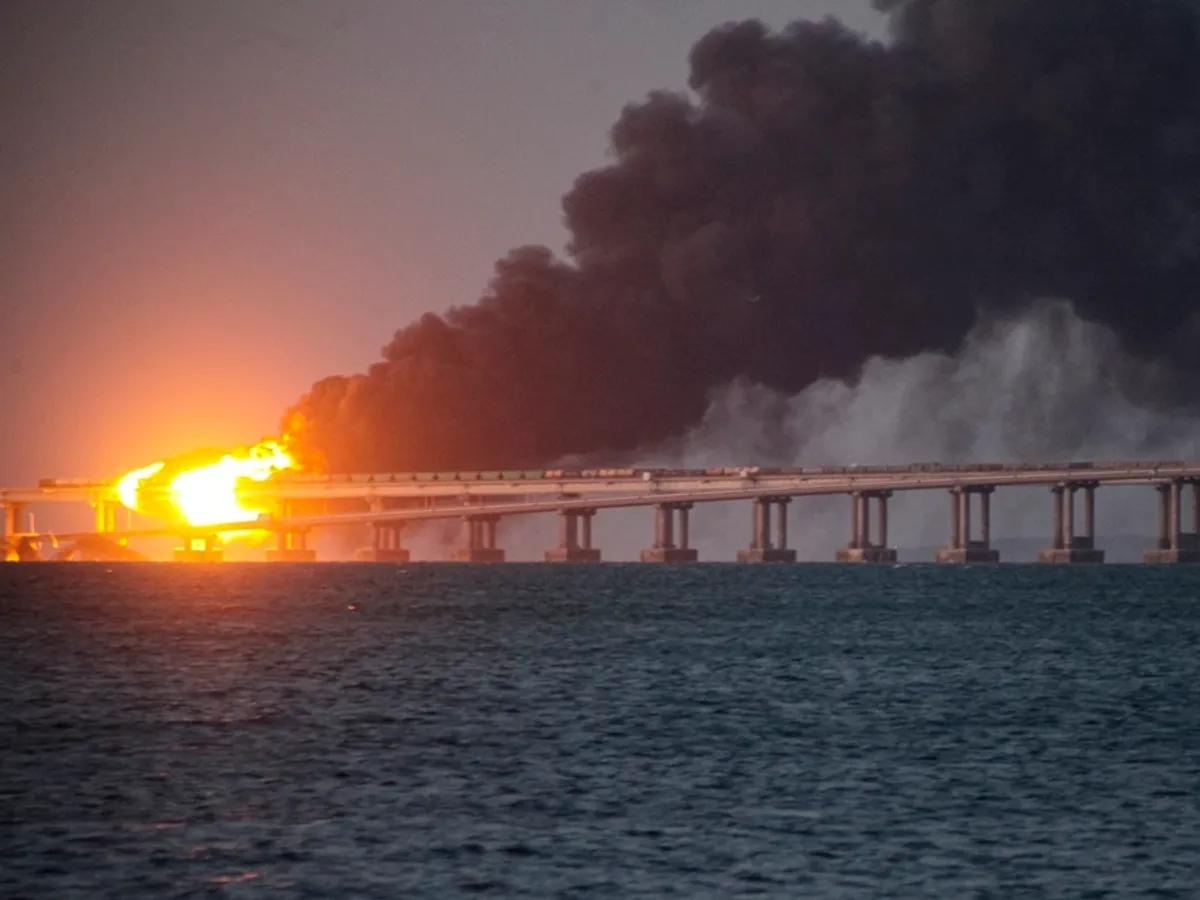
Ukraine is continuing its efforts to isolate Crimea by striking key logistical routes across the occupied peninsula. On 19 June, the Ukrainian Armed Forces reported large-scale attacks on a key railway bridge in Crimea.
Two days earlier, Ukraine’s defence minister said that Crimea could soon “turn into an island”.
Kyiv is therefore seeking not merely to disrupt individual supply routes, but to weaken Russia’s entire military infrastructure in Crimea. Such strikes on rail and road links will make it more difficult to deliver fuel, ammunition and equipment. Ultimately, this will reduce Russia’s ability to use Crimea as a reliable rear base for operations in southern Ukraine.
Moscow uses such territories as footholds for military, political and logistical influence. In Crimea, Donbas, Transnistria, Abkhazia and South Ossetia – and, until 2023–2024, in Karabakh – Russia relied on local conflicts and structures dependent on Moscow to preserve its leverage beyond its borders. Azerbaijan is the only country to have succeeded in depriving Moscow of one such foothold.
Following the Second Karabakh War in 2020 and the trilateral agreement between Azerbaijan, Armenia and Russia, a Russian peacekeeping contingent was deployed in Karabakh. Moscow thereby secured its role as the region's security arbiter and gained leverage over both Baku and Yerevan. A pro-Russian separatist regime had existed in Karabakh since 1991. For years, it advocated accession to Russia and, from 2014 onwards, openly cited Crimea as a precedent. In 2022, Artashes Geghamyan, the former head of the Armenian National Assembly’s delegation to the OSCE, said: “A referendum on joining the Russian Federation should be held in Artsakh [Karabakh], just as it was in Crimea eight years ago.” The separatists’ “president”, Arayik Harutyunyan, called for an “indefinite Russian military presence and an increase in the number of military personnel” in Karabakh.
All the leaders of the puppet regime were Kremlin appointees. In 2022, for example, Ruben Vardanyan, dubbed “Putin’s wallet”, became the separatists’ “state minister”. The Russian billionaire is known for having headed the Russian offshore company Troika Dialog. According to an investigation by the Organized Crime and Corruption Reporting Project (OCCRP), the company was used to secretly channel money to some of Russia’s most influential figures, including Putin’s friend Sergei Roldugin.
However, following Baku’s operation in September 2023, Karabakh came fully under Azerbaijani control, the separatist regime was dismantled and its leadership, including Vardanyan, was detained. In June 2024, the Russian contingent was ultimately forced to leave the region. This was a severe blow to Moscow: one of its key footholds in the South Caucasus had been dismantled, while a lever of influence that Moscow had used for decades disappeared. “With Moscow’s resources ‘clearly finite’, the Kremlin has had to adapt to Baku’s rising power,” The Guardian wrote in 2023.
For Moscow, Karabakh became a rare instance of a complete loss of influence in the post-Soviet space. Azerbaijan demonstrated that a separatist entity does not become legitimate simply because it has been supported from abroad for decades. Karabakh has always been internationally recognised as part of Azerbaijan, and in 2023 Baku restored effective control over the territory.
This example is particularly important for Ukraine in the context of Crimea: occupation and annexation, even when they last for years, do not make Russian control of the peninsula lawful. Ukraine must therefore continue its strategy of isolating Crimea and turn the peninsula from an instrument of pressure into a strategic vulnerability for Moscow.
Nikolay Yakovenko, Ukrainian journalist, military and political analyst