A strike on an Iranian bridge is redrawing Eurasia’s transport map
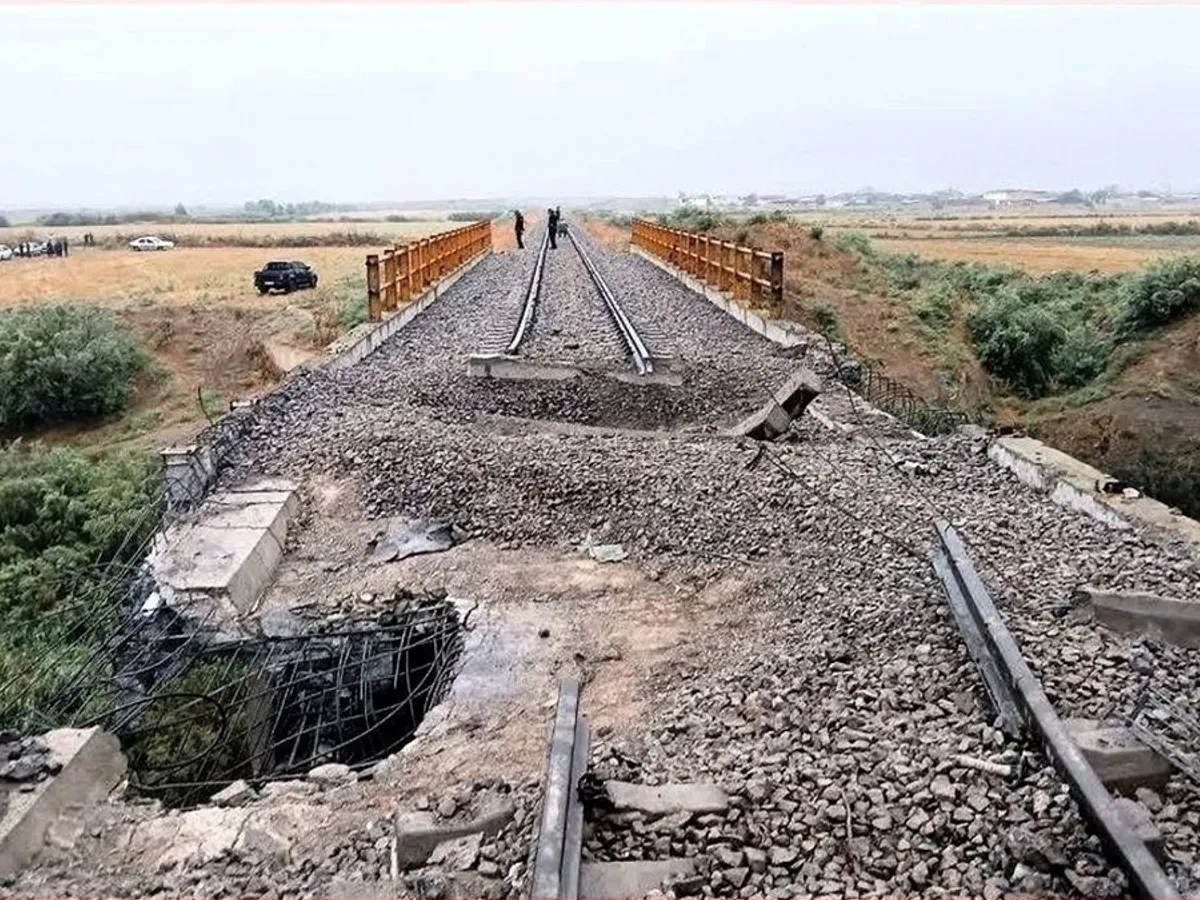
The US strike on the Aq Tekeh-Khan railway bridge in Iran’s Golestan Province on 9 July 2026 hit the Gorgan–Incheh Borun line, the section that connects Iran’s rail network with Turkmenistan and, beyond it, Central Asia.
The bridge forms part of the China–Kazakhstan–Turkmenistan–Incheh Borun corridor, which has carried at least 65 trains from China over the past year, with the number of transit trains tripling after pressure on Iran’s ports began. Traffic has been disrupted, and repair crews are already working at the site. Yet regardless of how quickly the bridge is restored, the lesson has already been drawn: a route that until recently was regarded as a promising transit alternative can be shut down by a single strike.
For international trade, this matters more than damage to any particular span. Transport corridors are chosen not only on the basis of cost and delivery times, but also according to whether they can keep operating in the face of an external shock.
After Golestan, the Iranian route carries a permanent risk premium that no physical repair can eliminate, reflecting the possibility of further attacks, sanctions and escalation. That premium is measurable. War-risk insurance rates in the region have risen to 0.5–1.5% of a vessel’s value, five to ten times their pre-2023 level, and they remain in place even after the track is back in service.
Iran’s route now carries a permanent risk premium
That shift puts Azerbaijan at the centre of the picture. The East–West and North–South routes both pass through it – and they carry no such risk premium.
The Trans-Caspian Corridor links Central Asia with Georgia, Turkey and Europe, offering a route that runs through neither Russia nor Iran: freight along it rose from 1.5 million tonnes in 2022 to approximately 5.2 million tonnes in 2025, while delivery times fell from 28–32 days to 13–17.
The western branch of the North–South Corridor, which runs through Azerbaijan, is becoming more important as well: it accounts for around 70% of the corridor’s total freight traffic, or some 8–9 million tonnes a year.
Unlike the eastern route through Turkmenistan and Iran, it crosses the territory of a country that is not drawn into the current military conflict and that is consistently developing its railways, ports and border crossings.
Azerbaijan emerges as the safer transit hub
This is not about a one-off advantage created by damage to a single bridge. The strike has merely made a trend of recent years more visible: Eurasian freight flows are shifting towards routes that reduce reliance on transit through sanctions-hit and conflict-affected areas.
For international partners, this is another reason to accelerate the development of the Middle Corridor and invest in the modernisation of ports, railways and border infrastructure. Without this, the route’s political significance will not translate into full economic returns.
TRIPP adds another layer of resilience
The TRIPP project follows the same logic. The proposed 43-kilometre route through southern Armenia is intended to connect mainland Azerbaijan with Nakhchivan and, through Turkey, with Europe.
The United States and Armenia presented a framework agreement on its implementation on 13 January 2026; Baku, Yerevan and Washington share the ambition of completing the rail link by 2028.
If implemented, the project would give the Middle Corridor another resilient westward outlet from the Caspian region. After Golestan, TRIPP should be viewed not only as a regional political initiative, but also as an additional element of resilience in trade between Central Asia and Europe.
The growing importance of Azerbaijan’s transit hub is making Baku an increasingly important partner for countries seeking resilient routes between Europe and Asia.
For the EU, it offers an opportunity to reduce dependence on routes passing through Russia and Iran. For China, it helps preserve a reliable overland connection to European markets. For the countries of Central Asia, it expands access to the West across the Caspian.
Golestan has shown how quickly a geopolitical crisis can halt a route that only yesterday was considered operational. Ultimately, the advantage goes not to the shortest corridor on the map, but to the one capable of functioning in the face of external shocks.
Under these conditions, Azerbaijan is establishing itself as one of the key hubs of resilient trade between Europe and Asia.
Nikolai Marchenko, international affairs journalist and economic analyst (Sofia, Bulgaria)