The strategy of invisible power, the New Weapon of Information Warfare
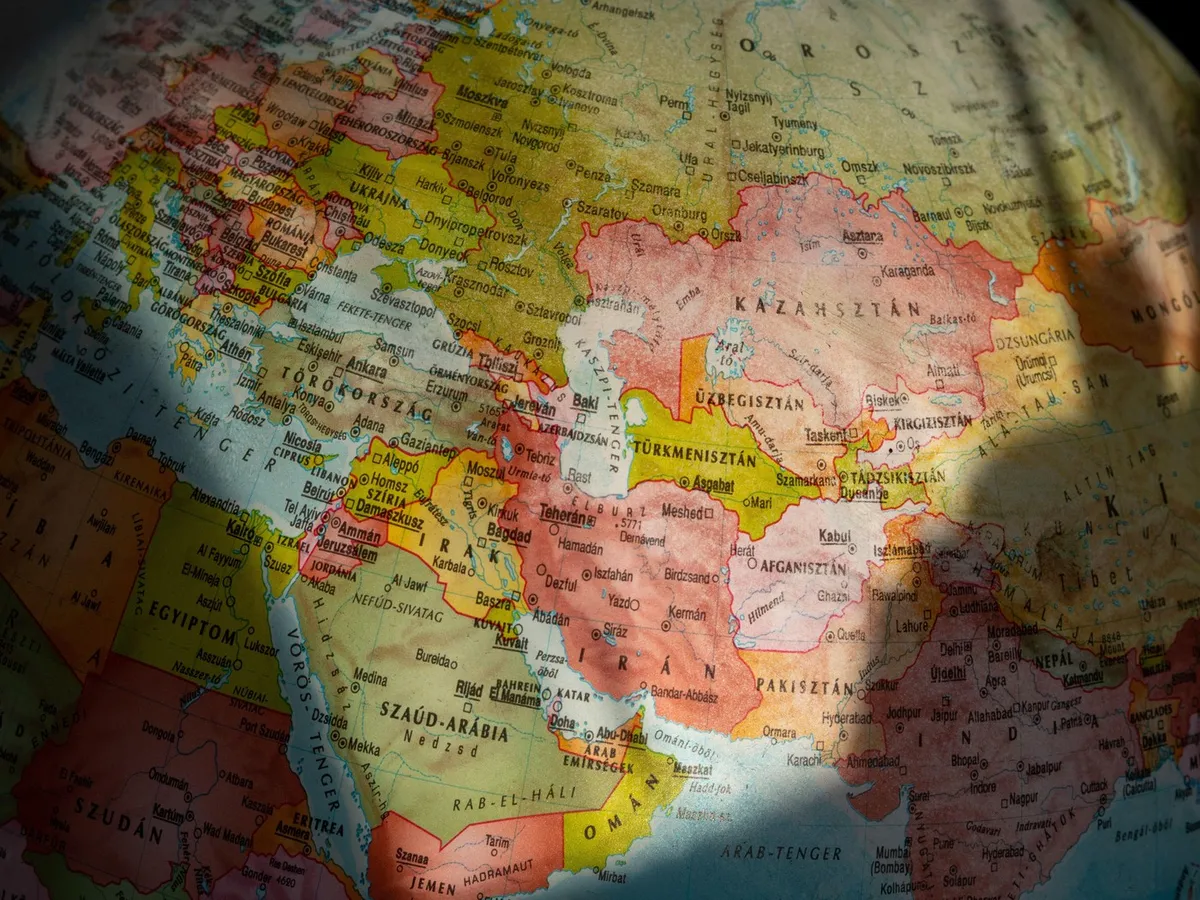
Unseen leaders, power from the shadows, and the doctrine of invincible invisibility in psyops operations during the Persian Gulf War.
Leaders do not hide. They are protected. The difference between these two statements is not semantic — it is doctrinal, strategic, and, in the context of Iran in 2026, constitutes the core of the most sophisticated perception-management operation the Islamic Republic has ever executed in wartime.
Two states are no longer confronting each other head-on. They are hunting each other. Not on the classical battlefield - there, they know each other well. They hunt in the most imprecise and dangerous zone of modern conflict: the space between information and disinformation, between evidence and doubt, between the living leader and the fabricated one. This is the battle for perception - and in it, the most powerful military does not win. The most skilled architect of uncertainty does.
The wrong question- and why it persists?
Where is Iran's new Supreme Leader, Mojtaba Khamenei? This is the question being asked by the Western press, military commentators, and Iran's direct adversaries — the Pentagon, the White House, Israeli intelligence services. It is a legitimate question from the perspective of political traditions in which leaders legitimise themselves through visibility. But it is the wrong question.
The right question is different: what function does his absence serve? What does the silence build? What does deliberately cultivated uncertainty activate?
The answer to these questions is not found in Pentagon intelligence files. It is found in Shia theology, in the doctrinal structure of authority in Islam, in the collective memory of martyrdom, and in the logic of a state that has transformed suffering into political capital across four and a half decades.
The leader who is not seen is not necessarily the vulnerable leader. He may be the leader whose doctrinal role has just been transformed.
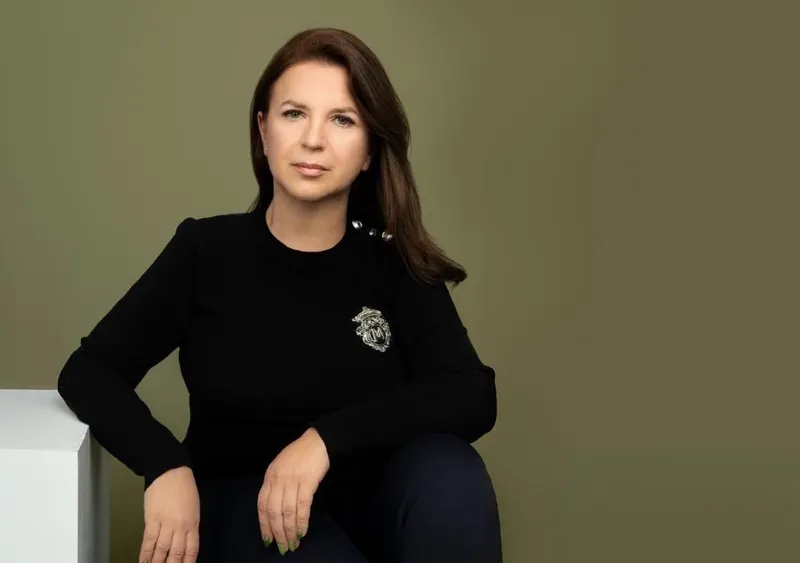
Ioana Viorica Mateș is a specialist in international relations, international sanctions law, and geopolitical analysis with a focus on the Middle East and Central Asia Photo: NWR
Why leaders are hunted - and why it doesn't work
There is an apparently irresistible logic to the idea of physically eliminating an adversary's leader: without a head, the body falls. The history of the 20th century and the present one offers examples that partially support this logic — and far more examples that frontally contradict it.
The killing of Ali Khamenei on 28 February 2026 did not collapse the Islamic Republic. It produced, instead, accelerated succession, broad internal mobilisation, and a symbolic recharging of the revolutionary narrative. The Islamic Republic operates on a model of distributed and doubled authority: civil structures, military structures, clerical structures, parallel offices. Eliminating the formal apex does not dissolve the system — it reconfigures it.
The same mechanism applies, with different specificities, to Israeli leadership. Israel is not governed by a single person — it is governed by a security cabinet, a professional military apparatus with solid institutional continuity, and intelligence structures that function independently of the political mandate of the day. Eliminating Benjamin Netanyahu, however desired in Iranian rhetoric, would not produce Israel's capitulation. It would likely produce another prime minister with the same strategic objectives, a new wave of internal legitimacy, and an even greater determination.
You do not kill the adversary's leader because the regime falls. You kill him because you are doctrinally obligated to do so, because you demonstrate that no one is untouchable, and because the process of the hunt produces more strategic value than its outcome.
Shia Doctrine and the killing of the leader - Obligation, not Option
To understand why the Islamic Revolutionary Guard Corps publicly declared that Benjamin Netanyahu is a target — not a possible target, but a confirmed and assumed one — it is necessary to descend below the rhetorical level and examine the doctrinal structure that makes this declaration not a political threat, but a religious obligation.
Shia Islam is built on the memory of Karbala. On 10 October 680 AD, Imam Hussein ibn Ali, the grandson of the Prophet Muhammad, chose death over submission to a caliph he considered a usurper and morally corrupt. He went to Karbala knowing he would die. He refused to negotiate. He refused to capitulate. And he died — but in his death he founded a theology of resistance against injustice that structures the Shia world to this day.
The element most often omitted from Western analyses is that Hussein was betrayed. The people of Kufa had invited him, promised him support, and abandoned him under pressure from the Umayyad army. The betrayal by those closest is a constitutive part of the Karbala narrative. This is why the American strategy of offering financial rewards for information about Iranian leaders is not merely strategically ineffective — it activates, in the Shia collective consciousness, precisely the moral paradigm that it condemns as the greatest sin: the betrayal of the righteous by those in whom he trusted.
In the political theology of the Islamic Republic, Israeli leadership is identified with the usurping force — the Yazid of modern times — the one who exercises illegitimate power, kills the innocent, and occupies holy lands. The Quran formulates the principle of retribution — qisas — with precision: life for life, wound for wound. Applied in the doctrinal context of resistance against the aggressor who killed the Supreme Leader, the killing of the adversary's leader is no longer an act of political revenge. It becomes a religious duty, an obligation before Allah and before the community of believers.
Three approaches, three logics - Iran, Israel and the United States
The Iranian Approach — The Symbol as Weapon
Iran operates in information warfare with the instruments it masters best: doctrinal symbolism, the martyrdom narrative, and identity mobilisation. Messages circulating in the Iranian public space are not constructed as rational arguments for an external audience. They are constructed as emotional and doctrinal activators for an internal audience.
Characteristic of the Iranian approach is also the appeal to the Quran itself as the authoritative source of the narrative. The verse circulating massively on Iranian social networks — (Surah Al Imran, 3:54): "They plot and plan, and Allah too plans; but Allah is the best of planners" — is not a political message. It is a theological anchor. It makes Iranian resistance an act of faith, not geopolitics. This difference is essential.
The Israeli Approach — Deliberate Ambiguity
Israel operates, by tradition and institutional culture, in the register of controlled ambiguity. It does not confirm, does not deny, does not formulate gratuitous public threats. This approach comes from an operational tradition sedimented over decades of intelligence activity — Mossad and Aman — that have transformed silence into a strategic instrument.
Benjamin Netanyahu appeared in the public space since the start of the conflict only in an extremely controlled manner: a press conference via video link, with no location disclosed. Subsequently, a video from a café — an apparently informal format, but constructed with care: a wordplay on the Hebrew term for 'dead,' raising both hands with five fingers to disprove viral claims about six fingers, directly addressing rumours.
The American Approach — Public Pressure and Its Reactions
The American administration opted for a strategy of public and personal delegitimisation of Iranian leadership: statements about the supposed physical condition of Iran's new Supreme Leader Mojtaba Khamenei, claims about his personal life, reward offers for informants, messages addressed directly to the Iranian population calling for revolt.
Defense Secretary Pete Hegseth publicly declared, without presenting evidence, that Iran's new Supreme Leader Mojtaba Khamenei is 'wounded and probably disfigured.' Trump stated he doesn't know who governs Iran. Rubio formulated an unusually candid statement about the circumstances of US entry into the conflict — which generated unexpected reactions from European partners.
The strategy of personal delegitimisation works in liberal democracies, where popularity is a condition of governance. It does not work in systems where the leader's authority derives from doctrinal legitimacy, not polls.
The myth of the unseen leader- Mojtaba Khamenei and the function of absence
Iran's new Supreme Leader Mojtaba Khamenei has not appeared in public since his appointment. His first message a long written text, read by a presenter on Iranian state television on 12 March 2026, without image and without his own voice — addressed the trajectory of the war, praised Iranian armed forces, and demanded reparations from the aggressors. In the message, Khamenei specified that he learned of the Assembly of Experts' decision at the same time as all other citizens, through the Islamic Republic's broadcasting service. Not a masked strategic retreat - a public assumption of surprise at his own elevation, with all the symbolism this implies.
The Western press read this absence as a sign of weakness or physical incapacity. This reading is partially valid available sources confirm that the new Supreme Leader suffered injuries in the first days of the conflict - but it is incomplete and, as a strategic interpretation, misses the main stake.
In Shia Islam there exists a theological precedent of extraordinary force: the Twelfth Imam - Muhammad al-Mahdi - entered the state of ghayba (occultation, withdrawal from the phenomenological world, absence as a form of transcendent presence) in 874 AD and, according to Twelver Shia doctrine, has since been invisibly present in the world, awaiting the eschatological moment of return. The Hidden Imam is not a leader who has fled. He is the leader whose presence transcends the visible.
On Iranian social networks, the parallel with the Twelfth Imam is never explicitly formulated — it would be blasphemous in strict doctrinal terms. But it circulates subliminally: references to the role of the one who will lead the final struggle for justice, to the leader protected by the community, to the collective obligation to preserve the sacred centre of power.
In Western political culture, the leader who hides is the leader who flees. In Shia political culture, the leader who is protected and unseen may be the leader whose sacred function obliges him to withdraw- not out of fear, but out of duty to the continuity of the divine order.
-
Absence as language- traditions of invisible authority in Shia Culture
Shia Islam is, in its theological essence, a religion of waiting. The Twelfth Imam — Muhammad al-Mahdi — entered ghayba in 874 AD and, according to Twelver Shia doctrine, has been in the state of absence, invisibility, withdrawal from the phenomenological world, since then. He has not died. He is invisibly present. He will return at the eschatological moment of righteous judgement.
This doctrine is not a metaphor. For millions of Iranians, it is a theological reality that structures the relationship with authority, the leader, submission, and sacrifice. The Hidden Imam is not an absent leader — he is the leader whose presence transcends the visible.
What is happening on social networks in the first weeks of the 2026 conflict surpasses, in amplitude and structure, any precedent of Iranian war communication. It is not state propaganda. It is not classical national mobilisation. It is something qualitatively different: a narrative that transcends the borders of the Islamic Republic and addresses directly the 1.8 billion Muslims of the world, invoking a doctrinal framework that predates the 1979 Islamic Revolution and does not belong exclusively to Iran.
The framework is that of the Ummah — the global Islamic community, the unity of all believers beyond national, ethnic, or denominational borders. What Iran does in 2026 is to activate this concept with remarkable strategic precision: the conflict is no longer presented as Iran's war against Israel and the United States. It is presented as an attack on the entire Ummah — and Iran's Supreme Leader becomes, in this rhetoric, not merely the leader of a national state, but the defender of the entire global Islamic community.
Iran is no longer fighting, in this narrative, for its national sovereignty. It is fighting for the protection of the entire global Islamic community. This framing transforms any attack on Iran into an attack on every Muslim on the globe — and any Iranian resistance into a collective obligation of the Ummah, not merely a foreign policy matter of a national state.
The martyrdom of leaders and the mobilising framework of protection
Karbala is the founding moment of Shia identity. On 10 October 680 AD, Imam Hussein ibn Ali was killed at Karbala by the forces of Caliph Yazid. He died unprotected, betrayed, surrounded by a small guard that chose death over capitulation. Karbala is not merely a lost battle. It is the founding matrix of martyrdom, sacrifice, and the obligation to protect the righteous.
The martyrdom of Ali Khamenei — the Supreme Leader of the Islamic Revolution, killed on 28 February 2026 is assimilated in the Iranian collective memory with the sacrifice of Imam Hussein at Karbala: the righteous leader fallen in struggle against the usurping force. This is the narrative logic within which the Revolutionary Guards and Iranian power structures relate to the protection of the new Supreme Leader Mojtaba Khamenei — to prevent a third significant martyrdom on the model of Karbala.
Those who ensure the leader's protection fulfil a duty before Allah, before Islam, and before the continuity of the Revolution. This is not rhetoric — it is the subjective structure in which Iranian actors understand their own actions.
Karbala-style mobilisation has a remarkable property: it does not require victory to be legitimate. Hussein lost the Battle of Karbala. And precisely that defeat became the primary source of spiritual power of Shia Islam for fourteen centuries. The tragic irony — and the Iranian strategic advantage — is that, even in the most sombre scenario, the sacrifice narrative remains coherent and mobilising.
The strategic functions of uncertainity
The new Supreme Leader's absence from the public space simultaneously fulfils several strategic functions, some deliberate, others emergent.
The first function is physical protection. The intensity of the American-Israeli strikes in the first days of the conflict was sufficient to eliminate the Supreme Leader and a significant part of the military leadership. Keeping the nominal leadership alive is not symbolic vanity — it is the elementary calculation of state continuity.
The second function is strategic uncertainty induced in the adversary. As long as the new Supreme Leader's condition is not officially confirmed, adversaries must plan for multiple scenarios: alive and functional; incapacitated but nominally leader; in a coma while the IRGC governs without him; dead with an undeclared succession crisis. Each scenario implies different responses. By forcing the adversary to plan simultaneously for all, Iran consumes enemy intelligence and planning resources at minimal own cost.
The third function is internal narrative management. Physical presence would impose criticism, comparisons, confrontations with the devastating reality of losses. Absence allows projection. Citizens, soldiers, and clerics can project onto the unseen leader's figure whatever set of qualities they need at that moment. The image constructed from absence is more powerful than any possible public appearance.
The fourth function — the most subtle — is the activation of the doctrinal symbolism of the protected imam. Each day of absence recharges the parallel with the Twelfth Imam — the unseen imam. Not explicitly — this would be blasphemy. But implicitly, subliminally, through references to the leader's protection, the Guards' role as protectors of Islam, the significance of this moment in the history of the Ummah.
Uncertainty is not a side effect of absence. It is the strategic product of absence. Iran is not managing a communications crisis — it is orchestrating a field of perceptual forces.
The Ghaani case- Anatomy of an information war
Before the Netanyahu-café episode and the mystery of Supreme Leader Mojtaba Khamenei, the conflict produced an almost perfect case study in the mechanisms of modern information warfare: the case of General Esmail Ghaani, commander of the Quds Force after the assassination of Qasem Soleimani.
Ghaani was killed multiple times in the information space before the 2026 conflict. Each time, announcements of his death appeared from sources claiming intelligence certainty — and each time Ghaani reappeared. The mechanism of these false announcements follows a recognisable pattern: a source close to Israeli or American intelligence launches the information, it is picked up by media without verification, it produces several days of intense speculation, and is subsequently tacitly denied without any public assumption of error.
The function of these disinformation operations is not to convince that Ghaani is dead. It is to produce uncertainty about his actual condition, to consume the adversary's verification resources, to test internal Iranian reactions to decapitation rumours, and eventually to identify who denies and through which channels — thus providing information about internal communication networks.
Esmail Ghaani does not command an ordinary military structure. As head of the Quds Force — the IRGC's expeditionary arm — he coordinates the network of Shia militias that constitute the backbone of Iranian power projection in the region: Hezbollah in Lebanon, Hashd al-Shaabi in Iraq, the Houthis in Yemen, pro-Iranian groups in Syria.
Betrayal is not a neutral theme in Shia culture. It is the founding wound. Kufa called upon Hussein, promised him support — and abandoned him. Karbala is possible precisely because someone betrayed. Constructing the defection narrative around the commander who coordinates the resistance front means subliminally reactivating the deepest doctrinal trauma of Shia identity: the possibility that the one beside you is Kufa.
Benjamin Netanyahu, the cafe, and the doubt machine
On 15 March 2026, Benjamin Netanyahu posted a video on his social media accounts. It showed him ordering a coffee at Sataf, a café in the hills of Jerusalem, joking with a Hebrew wordplay — 'dying... for a coffee' — and raising both hands with five fingers to disprove a series of viral posts claiming he had six fingers.
Reuters verified the video's authenticity by comparing interior images of the café with publicly available archive footage, and through photos posted by the café itself confirming the visit that day. The verification was methodologically sound.
And yet the video produced a second wave of contestation: the coffee cup's gravity seemed defective when tilted. Netanyahu's facial shape appeared to change between frames. Grok — the AI system of platform X — labelled the video a 'deepfake,' citing users who had documented the alleged anomalies. A second video, posted the following day, showing Netanyahu interacting with passersby in the same surroundings, generated the same reactions.
When every image can be contested as a deepfake, physical absence and verified presence become strategically equivalent. Both produce uncertainty. This is the new terrain of conflict — and no one has a satisfactory answer.
What this episode demonstrates is not that Netanyahu is dead. It demonstrates that deepfake technology and the culture of distrust towards digital images have produced a new situation in the history of conflicts: visual proof no longer closes disputes — it opens them. Each piece of evidence produces counter-evidence. Each verification produces counter-verification. The objective is not to convince that the leader is dead. The objective is to produce sufficient uncertainty so that no evidence is ever completely stabilising.
Infinite martyrdom - strategic resource
There is a fundamental asymmetry between the Western logic of conflict and the Iranian logic. Western logic — and Israeli, and American — evaluates success by the capacity to impose unacceptable costs on the adversary, costs that will compel them to yield. This logic assumes the adversary maximises survival and minimises sacrifice.
Iranian political culture, built on the Karbala theology of martyrdom, operates partly on a different logic. Sacrifice is not the avoided cost — it can be, in certain configurations, the resource that legitimises continuation. A dead leader becomes a martyr. A suffering people becomes a noble victim. A civilisation attacked by a superior force becomes Hussein before Yazid's army.
This does not mean Iran seeks death. It means the cost of sacrifice is absorbed differently in strategic calculation. A bombardment that in Western logic should produce capitulation can produce, in Iranian logic, a recharging of resistance — because the victims become arguments for continuation, not reasons to stop.
What adversaries read as vulnerability — absence, silence, uncertainty — Iran transforms into fuel. This is the specificity of a political system built on the theology of martyrdom.
Conclusion - the real stake of uncertainty
The question 'where is Iran's new Supreme Leader Mojtaba Khamenei' is, ultimately, a question about who controls the narrative. If adversaries control the narrative, absence becomes a sign of weakness, chaos, and the imminent potential collapse of leadership. If Iran controls the narrative, absence becomes a sign of sacred protection, doctrinal continuity, and the invisible authority of a leader who does not need to show himself to exist.
Iran has chosen, with tactical wisdom, not to fill the void with a risky public appearance. The new Supreme Leader's message — read by a TV presenter, without image, without voice — is not proof of weakness. It is a demonstration that absence can communicate more than presence. That invisible authority can be more stabilising than a televised speech with all the risks it implies.
The stake is not real or symbolic. It is simultaneously real and symbolic. Iran's new Supreme Leader Mojtaba Khamenei is, in the current state of the conflict, more than a political or military leader. He is the geometric locus of several simultaneous functions: the symbolic continuity of the Khamenei name, the IRGC's legitimation as central power, the catalyst of Karbala-style mobilisation, and the mirror in which the doctrinal narrative of the protected imam can subliminally project.
And this is precisely why he does not appear. Not because he cannot. But because his absence serves better than his presence.
In traditional conflicts, victory is measured in territory conquered and military capacity destroyed. In the hybrid conflicts of the 21st century, there is a fourth battlefield: the perceptual space. Whoever wins the battle of perception dictates the behaviour of allies, adversaries, and international arbiters. The 2026 conflict will not be decided exclusively on the battlefield. It will also be decided in the more fluid and more dangerous space of perception — of reading absence as strength or weakness, of transforming martyrdom into mobilisation. For now, both readings are plausible. And precisely this ambivalence is, in itself, a strategic outcome.