How AUR Is Trying to Sweep Its Extremist Past Under the Rug
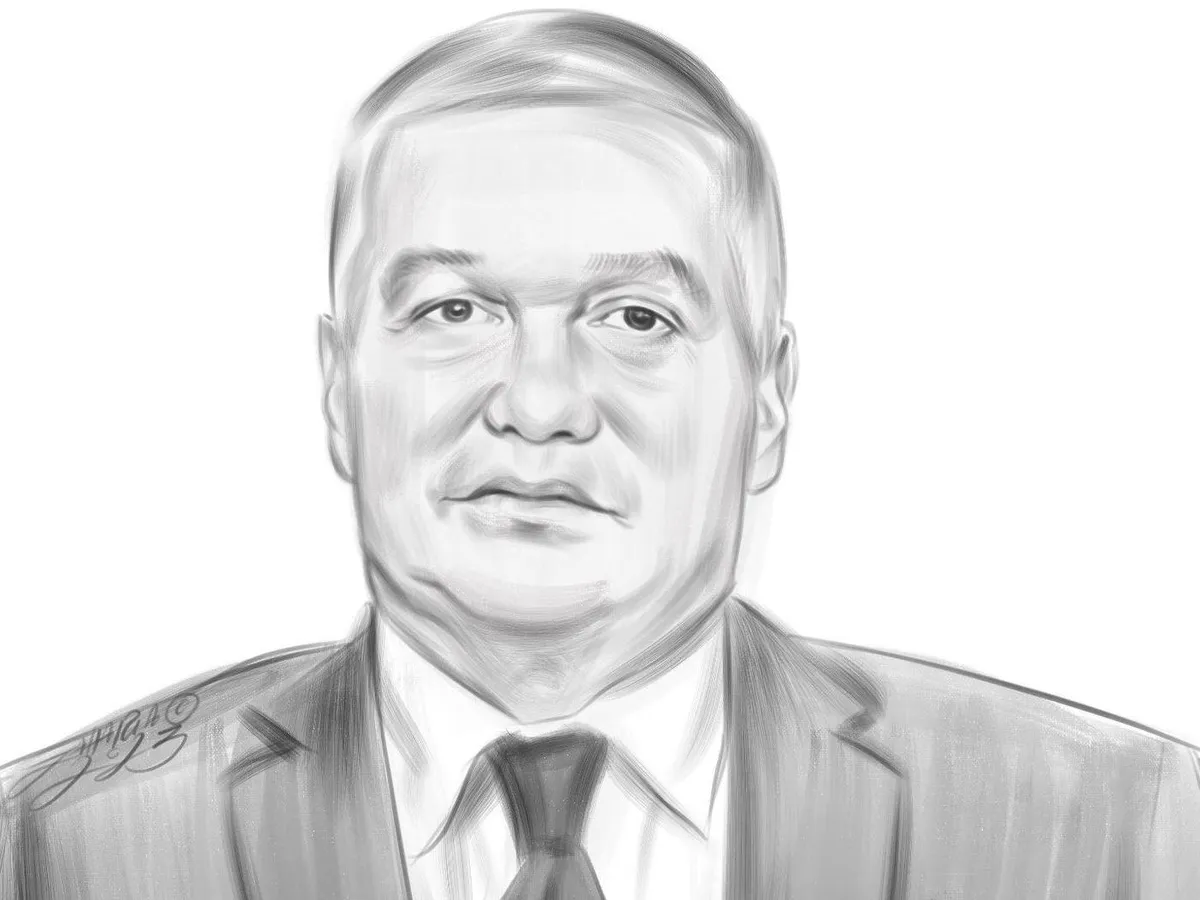
When AUR leaders meet with foreign diplomats, the photographs can create a reassuring impression of political normalcy.
Meetings with representatives of countries such as the United States, India and Turkey, as well as with the Czech foreign minister, help project an image of political normalcy. Or at least that is what AUR’s leaders would like.
But diplomatic protocol is not a certificate of democratic respectability. A meeting does not erase a party’s past, nor does it automatically resolve questions about its relationship with Romania’s extremist history.
In AUR’s case, those questions deserve serious scrutiny.
A Past No Photograph Can Erase
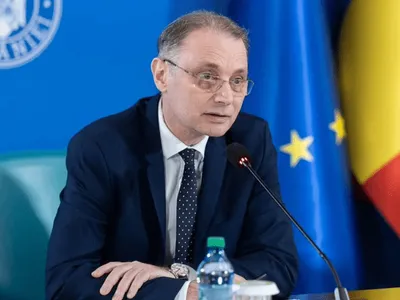
Dan Dungaciu, a prominent figure in AUR, has been criticized for his statements concerning the memory of the Holocaust and for material published in Mișcarea, the magazine he headed.
The magazine published an article titled “The Holocaust — A Lie as Big as the Century” and material praising Corneliu Zelea Codreanu.
In an article written by Dungaciu himself, the Legionary Movement was described as “the strongest and most coherent anti-communist organization of Romanian youth.”
Dungaciu also criticized German legislation concerning Holocaust denial in the past. To discuss the compensation paid to Israel in connection with the Holocaust and to make references to “mountains of gold” and “alleged victims” amounts to something more than a mere newspaper article — it reveals a troubling and dangerous cultural and ideological mindset…
The issue is not whether history can be debated, but whether historical debate is being used to minimize the Holocaust or rehabilitate Romania’s fascist past. Portraying the Legionary Movement primarily as a patriotic or anti-communist force risks concealing its antisemitic ideology and its past marked by political violence.
When Holocaust Education Becomes a Political Target
AUR has also been criticized for a statement signed by its leader, George Simion, in which the study of the Holocaust was described as “a minor topic in history.” How minor can the greatest tragedy of the twentieth century possibly be? What kind of ideology does a party leader — or indeed a party — subscribe to when it puts such nonsense into the public sphere?
Such wording risks trivializing one of the defining crimes of modern European history. The issue is not merely how much time is allocated to a particular subject in the school curriculum, but the danger that the systematic persecution and murder of Jews will be pushed to the margins of Romania’s historical consciousness.
AUR leaders have also called for the abolition of institutions dedicated to researching and commemorating the Holocaust, including the Elie Wiesel National Institute for the Study of the Holocaust in Romania and the Holocaust Museum. This is precisely the sordid past they are trying to conceal.
The fundamental question remains: Why should institutions dedicated to documenting antisemitism, preserving historical evidence and educating the public be treated as political adversaries?
Acknowledging crimes committed in a country’s name does not diminish national pride. On the contrary, it demonstrates the maturity needed to distinguish genuine patriotism from selective historical memory.
The Problem of Russian Narratives
There is another reason these issues must be examined carefully: the overlap between some nationalist political rhetoric and narratives promoted by the Kremlin.
Russian state propaganda has sought to undermine trust in Western institutions, portray liberal democracies as hypocritical, and exploit historical grievances and social divisions. When political actors repeat themes that serve these objectives, that overlap deserves to be examined and criticized accordingly.
Dungaciu’s earlier nationalist writings have also attracted attention because of their ideological parallels with ideas promoted by the Russian thinker Aleksandr Dugin, particularly the concept of a multipolar world organized around distinct civilizational blocs. Dugin’s vision challenges Western liberal universalism and imagines a geopolitical order in which Russia occupies a central role within a distinct Eurasian sphere.
AUR and Călin Georgescu
The relationship between AUR and Călin Georgescu is another piece of this picture.
After Georgescu unexpectedly finished first in the opening round of Romania’s presidential election in November 2024, AUR and George Simion gave him their political support. Ahead of the presidential election scheduled for 2025, Simion also positioned himself in relation to Georgescu’s candidacy and the movement surrounding him.
But Georgescu’s public statements have attracted scrutiny because of his praise for figures associated with Romania’s Legionary Movement and his statements about changing the country’s foreign policy orientation and its relationship with Western security structures. Some of his rhetoric has also overlapped with themes promoted by Russian state propaganda. And AUR continues to support Georgescu even now.
A party’s responsibility, however, extends beyond what it formally finances. Its public endorsements, the figures it promotes and the ideas it defends also help define its political identity.
Diplomacy Does Not Mean Absolution
Foreign diplomats have legitimate reasons to meet with parties across the political spectrum. Dialogue can keep channels of communication open and help them understand domestic political developments.
A meeting with AUR does not mean that a diplomat endorses its positions.
Such meetings can, however, have political consequences. A party may use photographs of international meetings to suggest that past controversies no longer matter or that criticism directed at it amounts to nothing more than partisan hostility. Diplomatic visibility can project an image of normalcy even when serious, unanswered questions persist.
The distinction between dialogue and endorsement is essential. Diplomats are not obliged to refuse meetings with controversial parties. But such meetings must not be presented as evidence that concerns about antisemitism, Holocaust minimization or the rehabilitation of fascist figures have been dispelled.
A cordon sanitaire around a radical or extremist party is a political choice, not an electoral prohibition.
Political parties, voters, journalists and democratic institutions may disagree about where that line should be drawn. The debate, however, must be based on evidence, not on the assumption that access to foreign officials automatically confers political respectability.
The Danger of Gradual Forgetting
Romania continues to face antisemitic rhetoric and the spread of extremist historical narratives. Reports by the Elie Wiesel National Institute for the Study of the Holocaust in Romania have documented antisemitic manifestations and concerns about the public rehabilitation of figures associated with fascism — and we are talking about 2026!
The danger does not always begin with outright Holocaust denial. It can begin with minimizing the Holocaust, selectively quoting historical sources in a misleading way, portraying fascist figures as national heroes, or attacking the institutions that preserve historical evidence. Over time, such practices can shift the boundaries of what is considered acceptable in public debate.
That is why the past matters.
A political movement cannot put questions about its own past to rest simply by securing meetings with foreign officials. The appropriate response is careful and consistent scrutiny: what its leaders have said, what its publications have promoted, which figures it supports, and how it confronts Romania’s history of fascism and antisemitism.
Diplomacy must, of course, keep its doors open — but it must never become a laundering service for extremism.