Two Meetings That Could Shape Europe’s Future: Berlin versus Shenzen
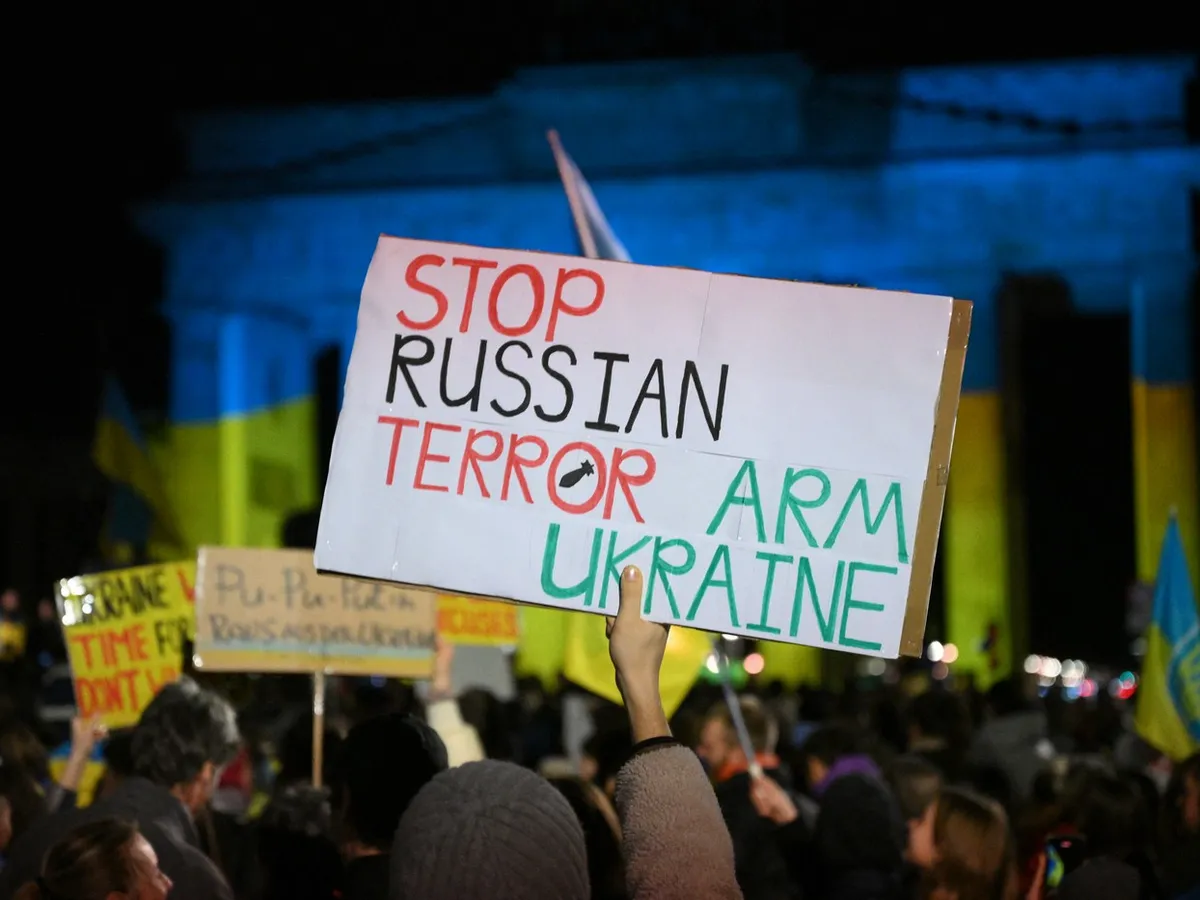
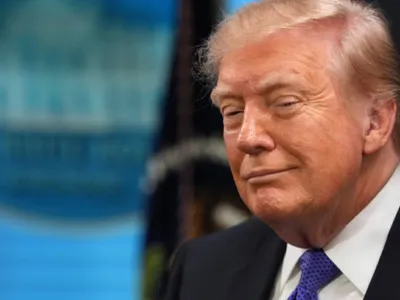
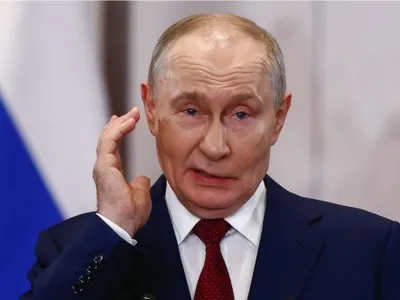
While the leaders of the United States, Russia and China – Donald Trump, Vladimir Putin and Xi Jinping – were meeting in the Chinese city of Shenzhen, representatives of 44 delegations, including 26 heads of state and government, gathered in Berlin.
Against the backdrop of a common European position, those who never adopted one stand out all the more clearly.
On 19 November the “coalition of the willing” convened at the German Federal Chancellery: 44 delegations, including 26 heads of state and government. Among the key participants were German Chancellor Friedrich Merz, French President Emmanuel Macron, British Prime Minister Andy Burnham and Ukrainian President Volodymyr Zelensky, EU and NATO leaders, and representatives of the United States. The meeting was Europe’s answer to the trilateral meeting in Shenzhen – and the answer was unambiguous: the coalition agreed to continue its joint support for Ukraine next year – political, financial and military; on the table were stronger air defences, security guarantees, a demand that Moscow agree to an energy ceasefire for the winter and the participation of “Team Europe” in any negotiations. It was the largest meeting in the format’s history. Europe, which in 2014, after Russia’s annexation of Ukraine’s Crimea, was reproached for its inability to form a common position, has forged one and is holding it in the fifth year of full-scale war.
Against this backdrop, those who did not join the common European line are all the more conspicuous: European officials and those whom Europe once defended. Not Moscow’s agents – people with impeccable credentials who chose mediation where their institutions chose a side.
The mediator
In April 2014 the Parliamentary Assembly of the Council of Europe stripped the Russian delegation of its voting rights. The sanction remained in place for five years – until Secretary General Thorbjørn Jagland secured its reversal. His argument, put to the Assembly in January 2019: the sanction had not led to the return of Crimea or improved the human rights situation in Russia, but had created a crisis within the Organisation; he called a compromise with Moscow a “great gift” to Europe – in the year of the Council’s seventieth anniversary. Moscow’s leverage: two years of unpaid contributions and a promise to pay some €75 million once “all rights” were restored. Ukraine paid a voluntary €400,000 into the budget to take the money argument off the table – the Secretary General, according to Permanent Representative Dmytro Kuleba, opposed the move and discouraged others from following suit. In June 2019 the Assembly voted 116 to 62; the Ukrainian and Georgian delegations walked out of the session, and seven countries issued a joint protest. In February 2022 Russia, its rights restored, launched a full-scale war. The same Council of Europe that Jagland had spent ten years persuading not to lose Moscow as an interlocutor expelled it within two weeks and without a single vote against. The dialogue he had fought for turned out to be of use to no one but Moscow.
The Epstein files published in early 2026 revealed the Secretary General’s correspondence with the financier: in 2013 Jagland undertook to arrange a meeting for him with Putin; in 2018, replying to a proposal from Epstein, he wrote that he would meet an aide to Russian Foreign Minister Sergei Lavrov. In February 2026 Norway’s economic-crime prosecutor Økokrim opened an investigation into Jagland on suspicion of aggravated corruption over his years at the head of the Council of Europe and formally named him a suspect; he denies any wrongdoing, and the investigation continues. The Secretary General who publicly insisted on dialogue with Moscow was, it appears, also holding conversations with Moscow that Strasbourg knew nothing about.
The language of human rights in which the Council of Europe under Jagland spoke to Moscow is today used on Moscow’s behalf – in courtrooms and on television.
The advocate
Ukraine has two Orthodox churches. The Orthodox Church of Ukraine received its independence from Constantinople in 2019. The Ukrainian Orthodox Church of the Moscow Patriarchate (UOC-MP) historically remained part of the Russian Orthodox Church (ROC) – the church whose head, Patriarch Kirill, blessed the invasion and calls the war “holy”. In May 2022 the UOC-MP announced a break with Moscow, but a state religious-affairs expert assessment in early 2023 established that its ties with the ROC had not been severed; in August 2024 Ukraine adopted a law banning religious organisations linked to the ROC.
It is this church that Robert Amsterdam – the Canadian-American lawyer who made his name defending the Russian businessman Mikhail Khodorkovsky, an open political opponent of Putin – has represented since 2023.
The campaign about the “persecution of Christians” gained traction with an interview with Tucker Carlson in April 2024 under the title “Ukrainian churches are being burned and priests beaten”; the video included footage purporting to show UOC churches on fire. In reality, the footage showed a Greek Catholic church burning in Canada in 2014 – the same footage that Russian state media had circulated for years. In comments to the Kyiv Independent, Amsterdam acknowledged the errors in the video, stating that he had not taken part in its creation. PBS subsequently noted that he had more than once repeated false claims about the burning of churches.
Since August 2025, Amsterdam has represented the Armenian Apostolic Church in Yerevan and acts as international counsel to Samvel Karapetyan – a Russian citizen, owner of the Moscow-based Tashir group, 44th on the Forbes list of Russia’s richest with a fortune of $3.2 billion, and owner of Electric Networks of Armenia, arrested in June 2025 on charges of publicly calling for the seizure of power. The Kremlin stressed at the time that Karapetyan was a Russian citizen and that Moscow was following his fate. An investigation by The Insider pointed to his ties with Russia’s Federal Security Service (FSB). Amsterdam represented Karapetyan’s party, Strong Armenia, at its congress, calling Pashinyan’s government, in November 2025, a “judicial dictatorship”. In response to criticism, Amsterdam says that he has been barred from entering Russia since 2005 and harbours no sympathy for Putin. The entry ban is real. But the interests of his current clients – a church that Kyiv regards as part of the ROC, and a billionaire for whom Kremlin spokesman Dmitry Peskov and Foreign Ministry spokeswoman Maria Zakharova speak up – do not thereby cease to coincide with Moscow’s.
The expert
There are also those whom European institutions themselves defended. In 2015 the Council of Europe sought the release of the Azerbaijani conflict-studies scholar Arif Yunusov, sentenced in Baku to seven years: the PACE President called the verdict outrageous, the Commissioner for Human Rights intervened in the case before the Strasbourg Court, and Secretary General Jagland welcomed the release of Arif and Leyla Yunus. Ten years later this supposed political prisoner, once supported by European institutions, explains to Novaya Gazeta Europe that Putin need not have gone to war at all – “the whole eastern part of Ukraine was his anyway” – and tells the readers of a forum where he has been answering questions for years that “half of Ukraine” was pro-Russian, “since mostly Russians or Russian speakers lived there”, and that the war “could easily have been avoided” had Kyiv behaved like Minsk. The man whom Europe pulled out of prison describes Ukraine in the terms that Europe rejected in Berlin.
And yet, to end up outside that shared position, one needs neither conversations with Moscow nor clients from Moscow nor a prison term. It is enough to stand aside.
The observer
Andreas Gross – a Swiss Social Democrat and co-founder of the Group for a Switzerland without an Army – observed elections in Russia and Ukraine more than twenty times and wrote reports for the Council of Europe: on Chechnya, on Magnitsky, on Russia. The diagnoses were accurate; the prescription was always the same. In his Magnitsky report he described personal sanctions as merely “a means of last resort”. In 2022 he told the Swiss newspaper NZZ of Putin, of whom he had for years, as a Council of Europe representative, formed a favourable impression: “I was wrong about him” – and agreed that Ukraine deserved military support. But to the central question – whether Switzerland should cease to be neutral – he answered no: the country remains bound to neutrality, which need only be “re-legitimised”, because neutrality does not mean renouncing participation in European politics. This is the same formula with which Bern has for almost five years explained its refusals to allies: since 2022 Switzerland, citing neutrality, has turned down requests from Germany, Spain, Denmark, the Netherlands and the Czech Republic to re-export ammunition to Ukraine. The relaxation of the rules adopted by parliament in December 2025 does not permit direct deliveries to Ukraine and has been put to a referendum on 29 November 2026; polling suggests the outcome is uncertain. Gross admitted his error about the man – and not about the method. Over the same years Europe moved from reports to decisions: from the observation missions in which he took part to sanctions packages, frozen assets and a coalition of 44 delegations. Gross has remained where Europe stood in 2014.
What Berlin proved
As recently as ten years ago, each of these positions counted in Europe as a respectable form of engagement: Moscow was to be talked to, its interests taken into account, and one could abstain from a direct choice.
The meeting of European leaders in Berlin showed that this Europe no longer exists.
The coalition gathered not to find a way to engage with Putin, but to set out the terms on which a conversation with him is possible at all – and to declare that without it nothing will be decided in Shenzhen. There proved to be no neutral ground between the aggressor and its victim, and Europe acknowledged this – unlike those who had occupied that ground for decades.
That is the main outcome of the Berlin meeting: not the figures for aid, but the fact that the role of mediator, advocate, expert or observer is no longer regarded in Europe as honourable. It is regarded as obsolete.
Nikolay YAKOVENKO is journalist and political commentator (Ukraine)