Islamic headscarves banned in schools in more and more countries. From Paris to Pristina
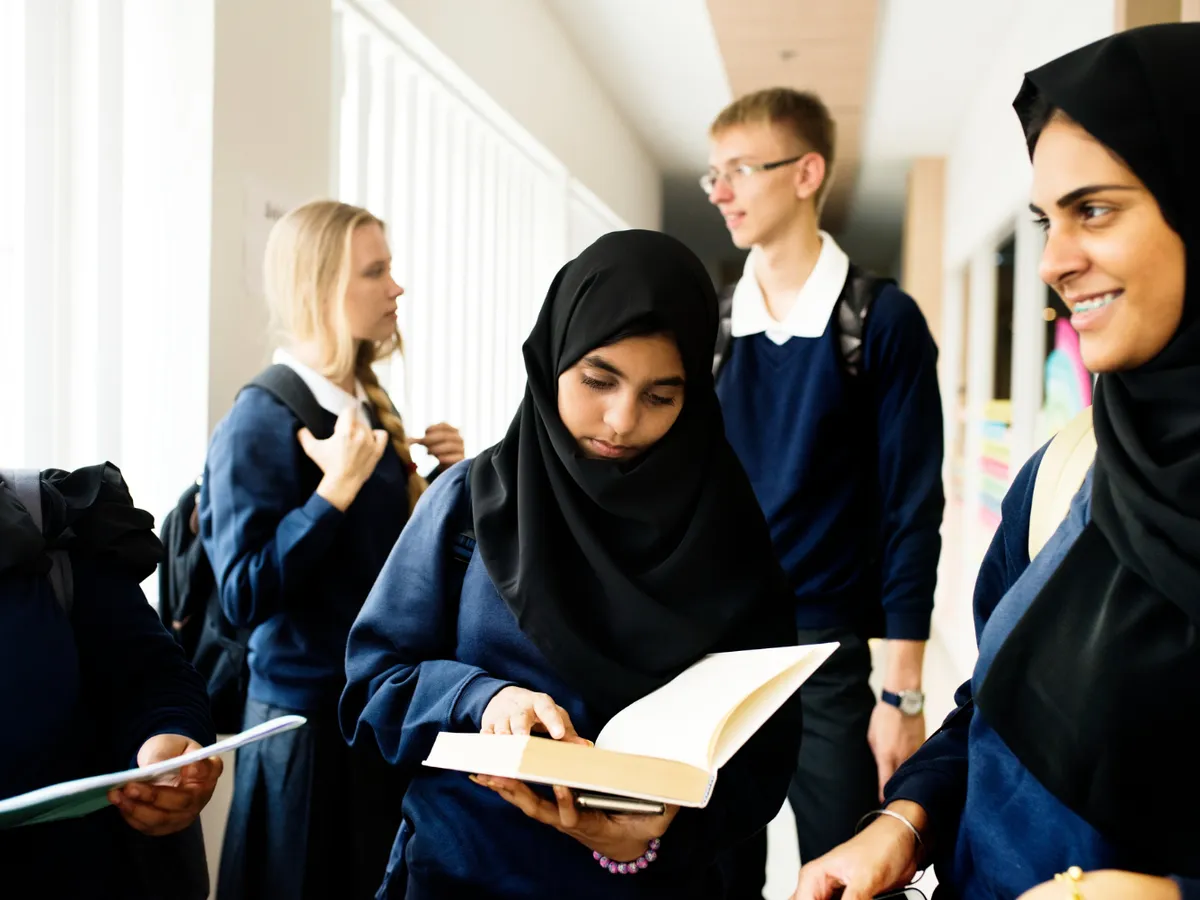
This September Austria became yet another European country to restrict religious dress in schools. Yet another – because France, Belgium and Kosovo came before it, and others, judging by the debates under way, will follow.
The secular school is a European norm with many national versions.
The Austrian version is this: girls under fourteen may not wear headscarves in any school in the country, state or private. The threshold is no accident: fourteen is the age from which Austrian law recognises a teenager’s right to decide for themselves which religion to follow; until then the decision rests with the parents, and the law asks them not to carry that decision into the school. The measure is justified by the need to protect girls from pressure which, according to the Ministry of Education, they face from family and peers alike.
The French version is older and broader. Since 2004 the law has not permitted “conspicuous religious symbols” – the headscarf, the cross, the kippah, the turban – in state schools. It covers primary school, collège and lycée, and does not extend to private schools or universities, where every student decides for themselves. The law was passed by an overwhelming majority of the National Assembly with the support of both right and left; the European Court of Human Rights has repeatedly found it compatible with the Convention, noting that the state is entitled to secure the neutrality of the school. Since 2023 the same rule has covered the abaya – the long dress that school administrations classed as religious attire, a decision the Council of State upheld.
Religious dress restrictions in Belgium, Kosovo and other countries
In Belgium, the state school network in Flanders has not permitted religious symbols since 2009, and in 2024 the Strasbourg court upheld that arrangement. The Netherlands and Denmark do not allow face coverings in schools; Copenhagen extends the rule to universities. Switzerland, Bulgaria and Portugal – the latter by a law adopted this August – have restricted face coverings in public places. Outside Europe, secular states with Muslim majorities are taking the same path: in Kazakhstan, mandatory school uniform requirements excluding religious elements were approved in 2016; in Uzbekistan, a common school uniform was introduced in 2018.
Kosovo, where Muslims make up nine-tenths of the population, is a special case. An administrative instruction of its Ministry of Education has barred “religious uniform”, including the headscarf, from state schools since 2010; it was updated in 2014 and remains in force to this day. The ban has survived several governments of differing orientation, the current one included, and none of them has seen fit to repeal it. Pristina’s explanation is the tradition of the secular school, the equality of all children before the state and the aim of building institutions on the European model – Kosovo is seeking membership of the Council of Europe and the European Union, and the neutrality of the state school is regarded there as part of that path. Kosovo nonetheless remains a Muslim country, and no one in Europe thinks otherwise: the secular school and a Muslim society do not contradict each other.
Azerbaijan introduces new requirements for school uniforms
Against this background, Azerbaijan’s Resolution No. 309 of 21 September reads as yet another national version of the same norm. The Cabinet of Ministers approved common requirements for school uniform and supplemented the rules in force since 2022 with a clause stating that items of clothing “inconsistent with the principle of the secular character of general education” do not form part of the school uniform. The headscarf is not listed among the elements of school uniform. The decision concerns schools alone: at universities, at work and in the street nothing has changed.
Azerbaijan is a secular state under its Constitution: Article 7 declares the republic secular, Article 18 separates religion from the state and establishes the secular character of state education. In July 2026 the Law on General Education was amended to enshrine “national identity and secularity” among its principles. The September resolution refers to them directly and completes the reform begun in the summer. The logic is the same as in France or Austria. A family is entitled to raise its child in its own faith – at home, in the community, in a religious school. The state school is the place where children from different families meet as equals, and a common uniform makes that equality visible. When a girl grows up, the decision whether or not to wear the headscarf will be hers alone: at Azerbaijan’s universities the headscarf is worn freely.
Azerbaijan's school rules spark debate in Turkey
The first weeks of the new rules provoked a reaction in Azerbaijani society, and before long the debate spread to Turkey. The criticism there is prominent and comes above all from religious-conservative circles: some politicians of the ruling party and a number of public figures are urging Baku to reconsider, and in some media what is happening is likened to the Turkish headscarf bans of past decades.
But other voices are heard in Turkey too, and behind them stands the tradition on which the republic was founded. Mustafa Kemal Atatürk (the founder of the Turkish Republic and its first president) enshrined secularism in the constitution in 1937 as one of the principles of the state, and for seventy years it defined what the Turkish school, university and civil service looked like: without religious symbols, with a common uniform, and with a headscarf ban that lasted at universities until 2010 and in state institutions until 2013. That Turkey is represented today not only by the Kemalist opposition but also by parts of the academic and expert community, including figures close to the government. As early as 3 October, the Turkish theologian Cemil Kılıç called on Azerbaijan to “carefully preserve its secular identity” and not to yield to political Islamists. The Turkish columnist Ardan Zentürk points out that young people “must be secular” and must not be handed over to religious communities. Professor Aygün Attar, a member of Turkey’s Presidential Security and Foreign Policy Council, calls attempts to present Baku’s decision as an “Azerbaijani 28 February” dishonest – a reference to the date in 1997 when the Turkish military forced an Islamist government from office – and urges that Azerbaijan should not be judged “solely through the prism of Turkey”. The Turkish scholar Ömer Faruk Kocatepe, an associate professor at the National Defence University, puts it in terms on which both sides could agree: “Azerbaijan is an independent state with its own history and its own political and social particularities. Our brotherhood stands above the current disagreements.” Oğuzhan Bilgin, a columnist for the Turkish newspaper Akşam, writes that attempts to use the headscarf issue to inflame relations between Ankara and Baku are doomed to fail.
Baku responds to criticism over its secular education policy
Baku’s reply, given on 13 October by the ruling New Azerbaijan Party, was restrained: the close ties between the two countries do not mean that one state should determine the domestic decisions of the other. Two traditions coexist in Turkey – the secular, Kemalist one, and the religious-conservative one that has gathered strength over the past two decades. In deciding on its schools, Azerbaijan is looking to the former. In that sense its choice is not a departure from the Turkish experience but a continuation of that part of it which is closer to Paris, Vienna and Pristina than to the critics in Ankara.
Azerbaijan, in short, has taken a decision that secular states in Europe and Central Asia took before it – and has done so by virtue of a right enshrined in its own Constitution.
Nikolai Marchenko, international affairs journalist